Dual role of benzoxazinoids in plant response to combined drought stress and aphid feeding
L. K. Hao, Z. Batyrshina, Y. Goldstein, A. Mishra, T. G. Köllner, B. Yaakov, V. Tzin
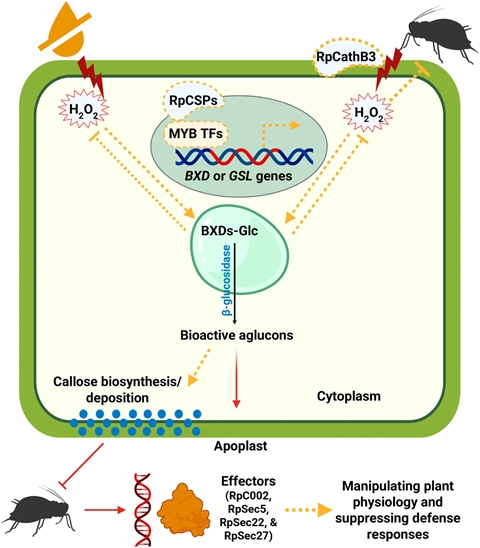
Plants rarely face one stress at a time. In cereal crops, the specialized metabolites benzoxazinoids (BXDs) are well known for deterring herbivores, but they also rise during abiotic stress, raising the question of what BXDs do when drought and insect attack occur together. In this study, we examined wheat (Triticum aestivum) seedlings exposed to drought, bird cherry–oat aphid (Rhopalosiphum padi) feeding, or both, combining physiological measurements with metabolite profiling and gene-expression analyses. Aphids feeding on drought-stressed plants performed worse and showed altered expression of stress-related genes, consistent with drought-stressed wheat leaves accumulating higher levels of defensive BXDs and callose (a cell-wall polysaccharide that can obstruct phloem access). On the plant side, genes involved in BXD biosynthesis (BX genes), callose formation (GSL/Glucan synthase-like genes), and selected MYB transcription factors were induced by drought and by aphid feeding, often showing additive upregulation under combined stress. The results support a model in which drought-enhanced BXD accumulation—likely regulated by MYBs—promotes callose deposition, helping maintain plant performance under drought while also reducing aphid feeding success. | 
 דיוור אלקטרוני