📉 Deficit Falls to 4.7%
🤖 #4 Global Tech Hub
🌎 Americas Trade +14.7%
|
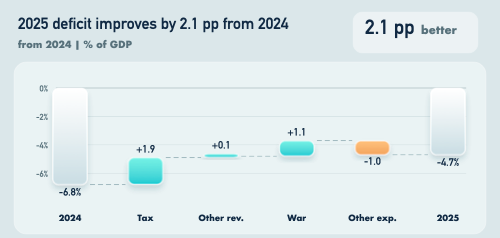
This week, Israel’s 2025 budget execution report was released, showing that the annual deficit stood at 4.7% of GDP, a notable improvement from 6.8% in 2024. The data indicates that this improvement was driven mainly by higher government revenues alongside a decline in war-related expenditures. At the same time, overall government spending remained elevated at 30.8% of GDP; however, excluding war-related costs, spending would have stood at 27.1%, a relatively low level by historical standards.
A newly published 2025 high-tech report further highlights the strength of Israel’s innovation economy, ranking the country 4th globally among major high-tech investment hubs and the largest outside the United States. Israeli tech companies raised $14.6 billion in 2025, which also marked a record year for exits. The report points to 8.2% growth in high-tech economic output, led by semiconductor manufacturing, advanced tools, and data processing & storage services.
Goods exports (excluding diamonds) totaled NIS 17.5 billion ($5.8b) in May, with trend data since the beginning of the year pointing to a shift in Israel’s trade composition. Total trade (both imports and exports) with the Americas has increased by 14.7% so far in 2026 compared to the same period in 2025, while trade with Europe and Asia has increased in a lower rate, suggesting a trend of increased trade with the Americas and the United States in particular.
Israel’s higher education system continues to expand its output, with 90.5 thousand graduates completing advanced degrees in the last academic year, including 57.5 thousand bachelor’s degree recipients. The share of STEM graduates remained stable, while the proportion of Arab and Haredi graduates increased, reflecting a gradual broadening of participation in higher education, and signaling deeper integration into Israel’s broader economy.
Private non-financial sector debt rose by approximately 2.3% in Q1 2026 to around NIS 2.5 trillion. During the quarter, businesses—particularly large and medium-sized firms—raised NIS 47 billion in debt, primarily through bank credit, while corporate bond issuances totaled NIS 18 billion, about half of which came from real estate companies. Household debt reached approximately NIS 914 billion, with mortgage borrowing totaling NIS 30 billion in the first quarter alone, a pace higher than in 2025.
While the continued rise in debt levels deserves attention, particularly given sectoral concentration and sensitivity to changes in financing conditions, these figures ultimately point to strong economic activity, with robust demand for credit from businesses and households, reflecting ongoing investment, expansion, and housing demand.
Stay informed and stand with Israel,
Noach Hacker
|
Israel’s 2025 budget deficit totaled NIS 98.6 billion, equal to 4.7% of GDP, down from 6.8% of GDP in 2024. Government revenues reached NIS 551.8 billion and expenditures totaled NIS 650.4 billion, mainly due to higher tax revenues and lower war-related spending.
|
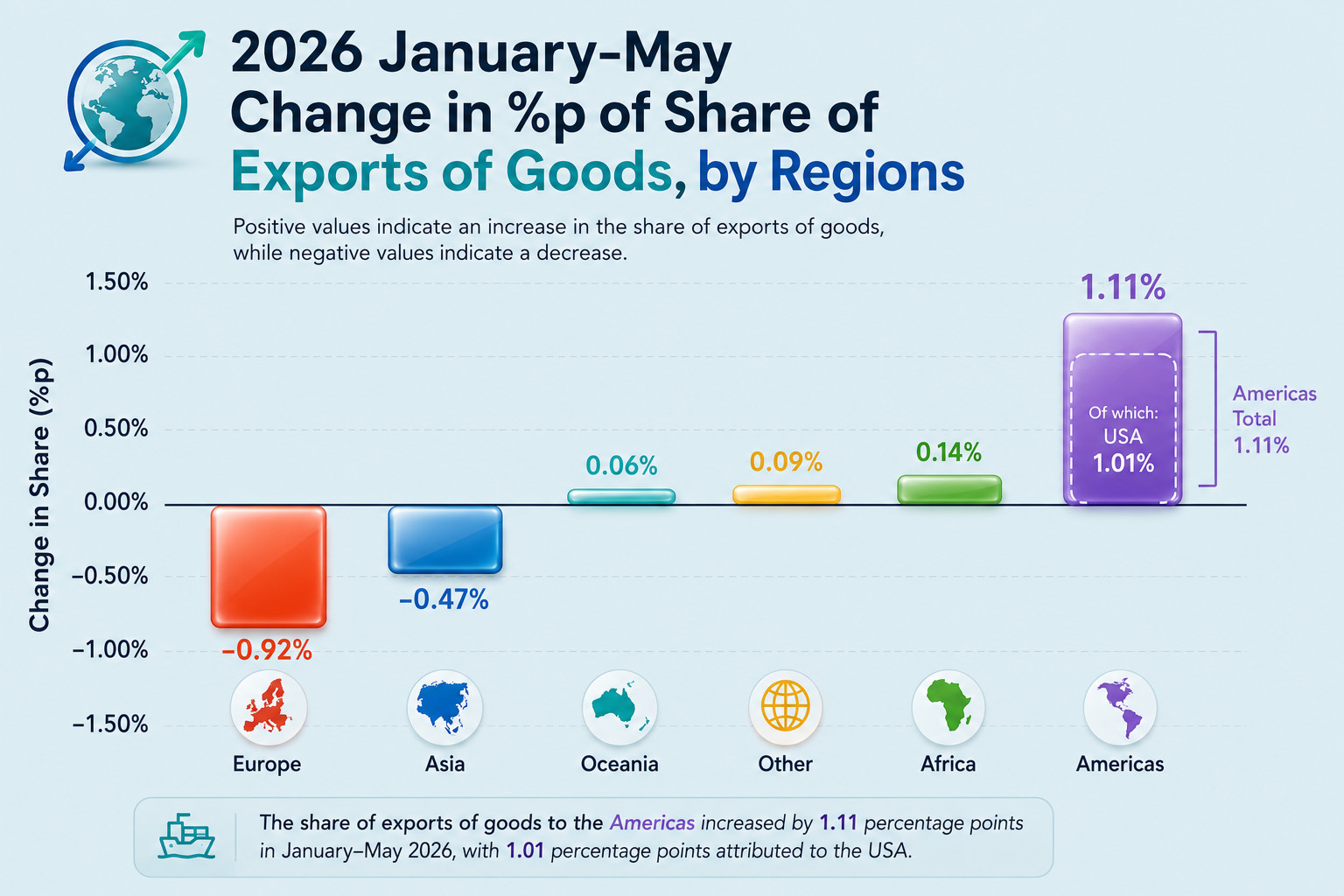
Israel’s goods trade continued to strengthen in the first five months of 2026, reaching approximately $69 billion, 14.8% higher than in the same period last year. Total trade with the Americas rose by 14.7%, led by the 13.95% growth in total trade with the United States. The total export of goods rose by 11%, while the export mix also shifted toward the Americas, whose share of Israel’s total goods exports
increased by +1.11%p (percentage points), and the United States among the Americas rose by +1.01%.
|
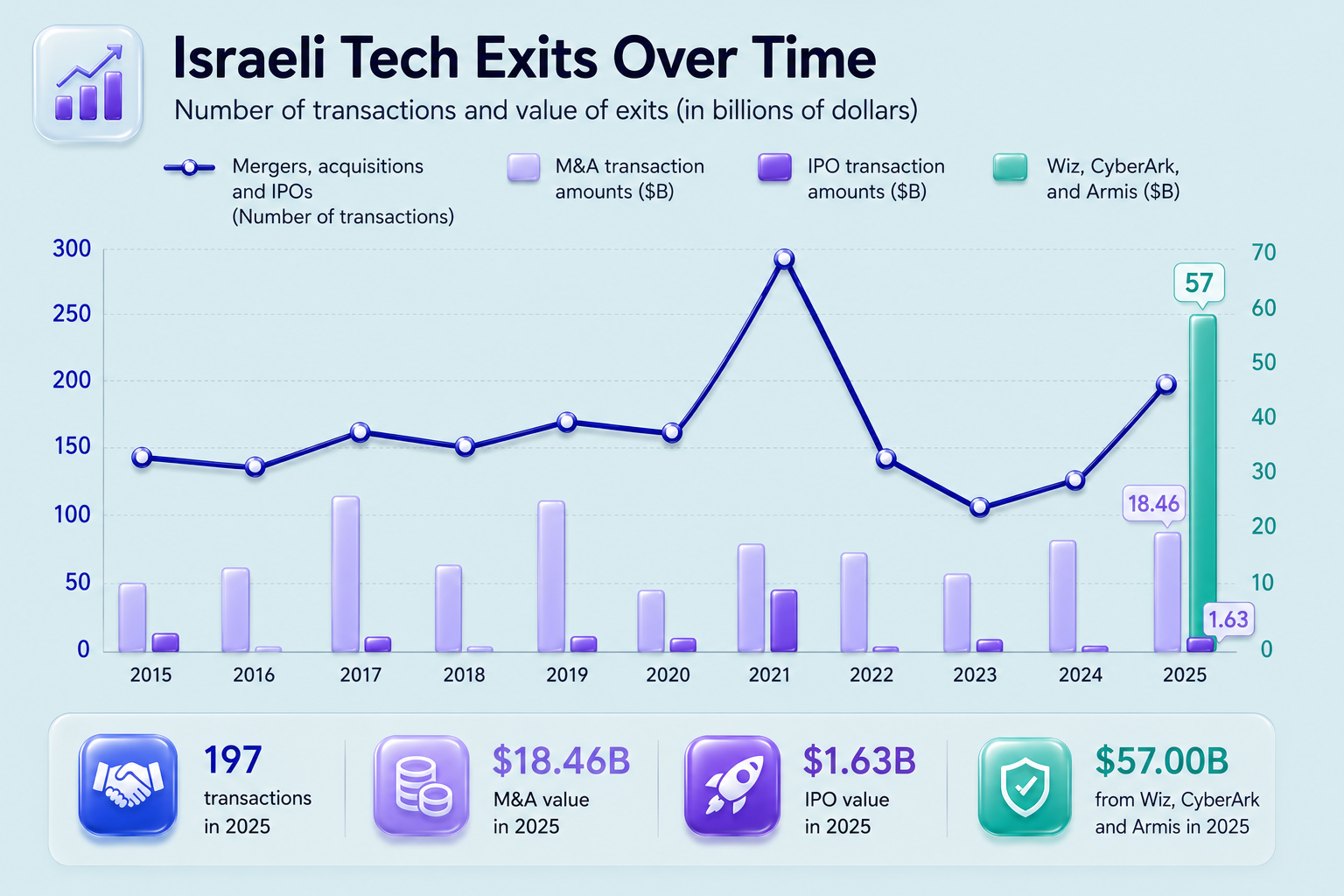
Israel’s high-tech output grew by 8.2% in 2025, with Hi-Tech exports reaching 58% of total exports. Venture-capital fundraising rose 30%, ranking Israel fourth globally among startup-investment hubs and first outside the United States. Exit deals were also strong, with 198 exits, including 189 M&A deals totaling $18.5 billion, while IPO value rose from $0.39 billion in 2024 to $1.6 billion in 2025. When including the Wiz, CyberArk, and Armis deals announced in 2025 (but approved in 2026), total exit value reached over $80 billion.
|
|
|
|
|






.png)