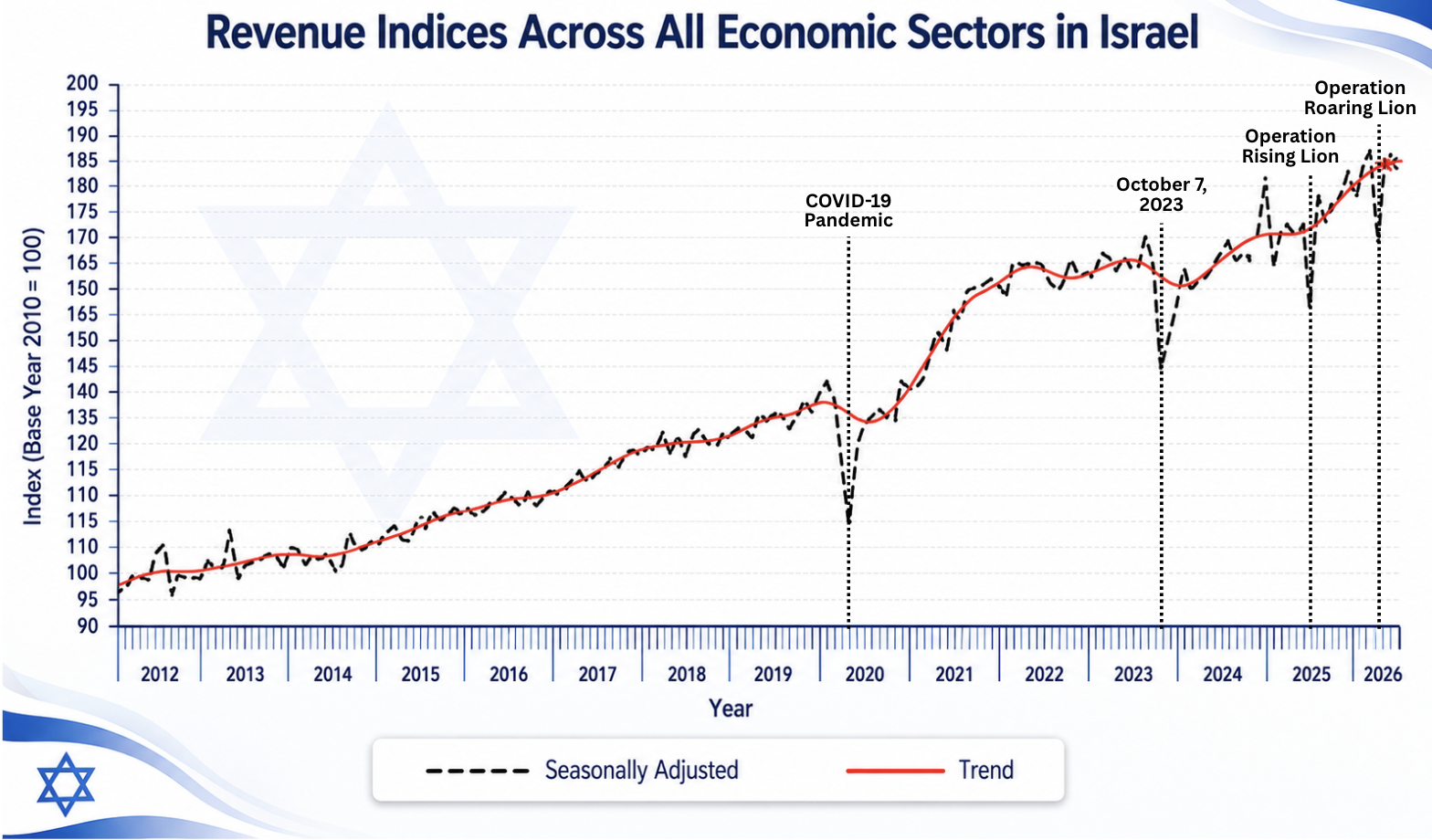
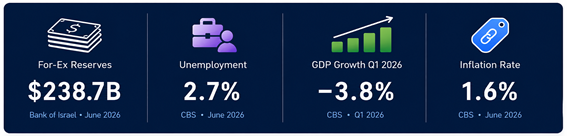
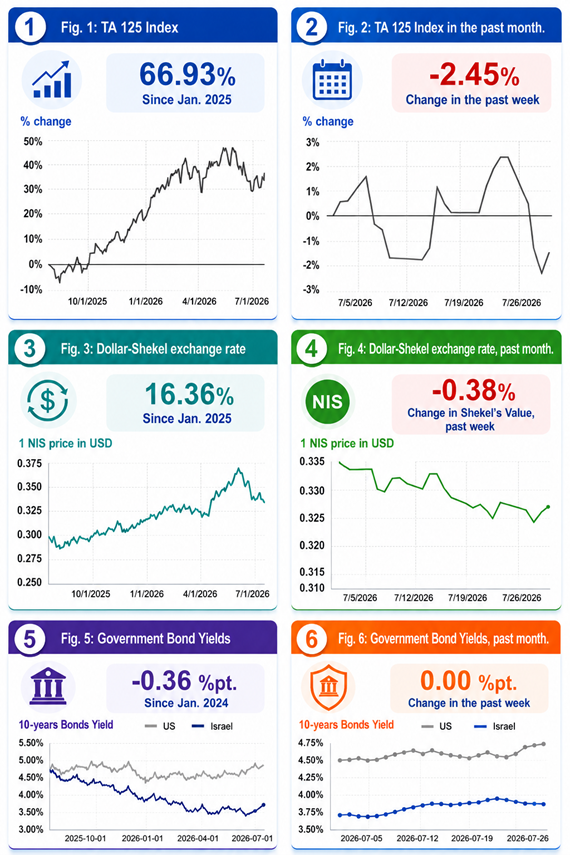
This week, the latest economic data from the Central Bureau of Statistics paints a compelling picture of strong recovery momentum within the Israeli economy. At the center of this trend is the domestic high tech and advanced industries sector, which is firing on all cylinders and driving industrial output to new heights. This dramatic surge in technological activity and exports is gradually trickling down into the commerce, labor, and local consumption sectors, creating a positive ripple effect across the entire economy.
The industrial and technology sectors are leading the current momentum with exceptional performance data for March–May. Overall industrial production registered an annualized increase of 10.7%, while high-tech manufacturing skyrocketed by an astonishing 24.3%. The vast majority of this output was directed toward global markets, as reflected in real export sales turnover, which jumped by a massive 53.8% in annualized terms. Meanwhile, domestic market sales also expanded, albeit at a more moderate pace of 3.5%. This broad resurgence is clearly evident in the VAT reports for May, showing a 3.7% growth in total economy wide turnover, a 9.4% surge in wholesale and retail trade, and a 20.7% increase in industrial high tech turnover.
This business momentum provides a powerful tailwind for the labor market, where demand for new workers keeps incresing. June data shows that the seasonally adjusted employment rate rose to 60.2%, up from 59.9% the previous month, while the overall labor force participation rate increased to 61.9%.
This employment growth rests upon a robust corporate foundation. In 2025, Israel had approximately 731,600 active businesses supporting about 4.6 million salaried jobs. Despite ongoing challenges, local entrepreneurship remains vibrant, with 52,015 new businesses established in 2025, representing a business birth rate of 7.1%, alongside an impressive 89.9% second-year survival rate for businesses founded in 2024. Notably, high growth companies stand out primarily within the high tech sector, where they account for 7.3% of all firms, compared to just 3.8% economy-wide.
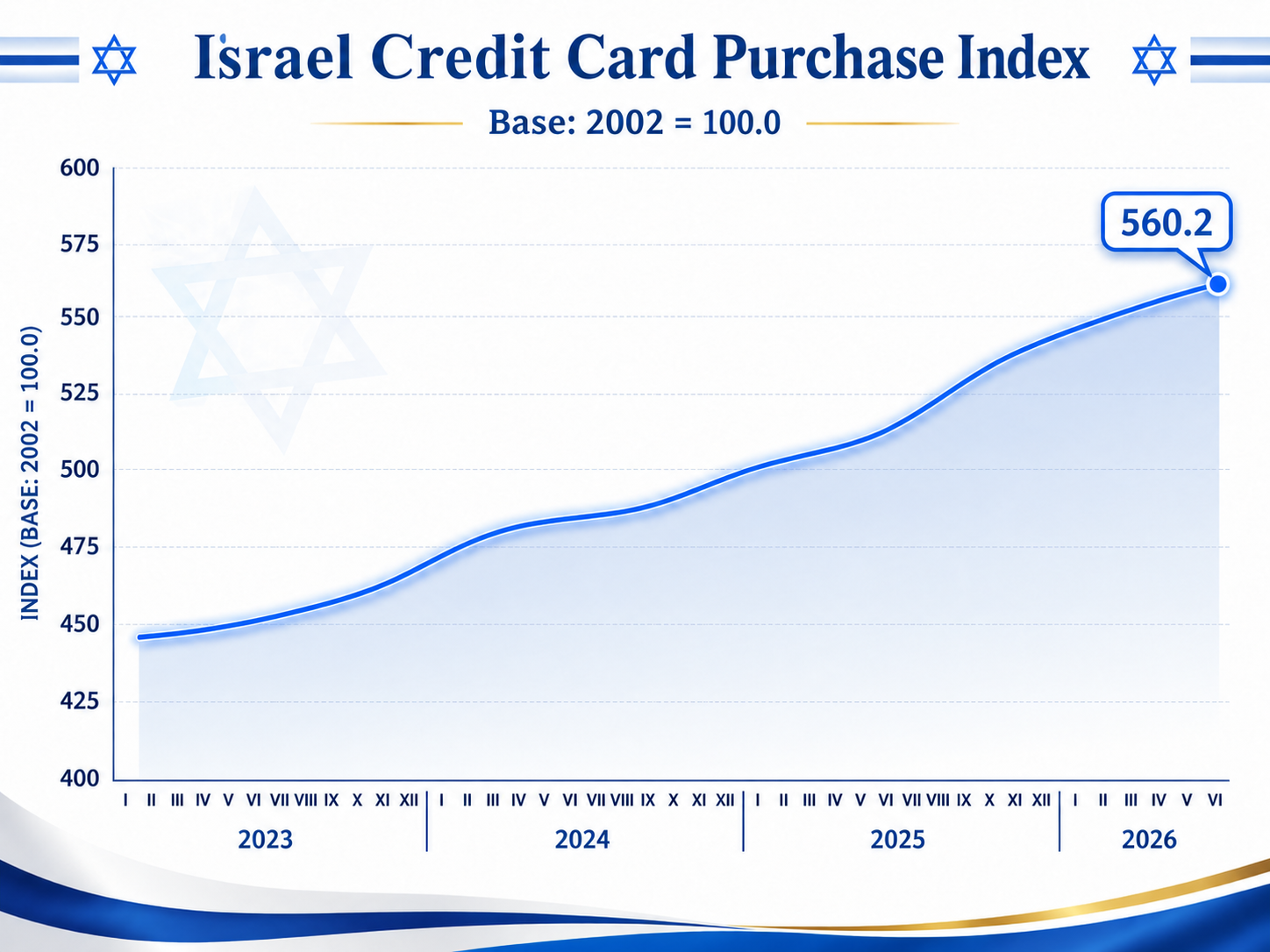
This chain of positive indicators is capped off by the Israeli consumer, who is demonstrating strong confidence and increasing private expenditure, with a 5.7% increase in real credit card purchases for the April–June period. Ultimately, the combination of exceptional technology exports, a tight labor market, widespread entrepreneurship, and robust private consumption proves once again that Israel’s macroeconomic foundations remain solid and stable against geopolitical headwinds.
This optimistic weekly briefing is also my final update to you. Following four fascinating and deeply fulfilling years serving as the Minister of Economic Affairs of the State of Israel to the United States in Washington, D.C., the time has come for me to conclude my term and return home to Israel. It has been an immense privilege to share the trends, challenges, and uncompromising resilience of the Israeli economy with you from here in the U.S. capital. I bid you farewell with deepest gratitude for your steady readership and engagement over the years. I sincerely hope you will continue to follow, invest in, and stand with the Israeli economy from afar. Israel's economy is strong and with the profound, enduring connection you share with it, it will get stronger and stronger.