👷 Higher Demand for Workers
📉 Lowest Inflation Since 2021
🚀 Economic Activity Surges 2.5%
|
This week, recent data points to a clear improvement in economic activity in Israel. For the first time in several weeks, the economy appears to be gradually emerging from the immediate effects of the conflict with Iran and returning to a positive growth trajectory. The overall picture is one of a relatively fast recovery, with activity resuming across a broad range of sectors.
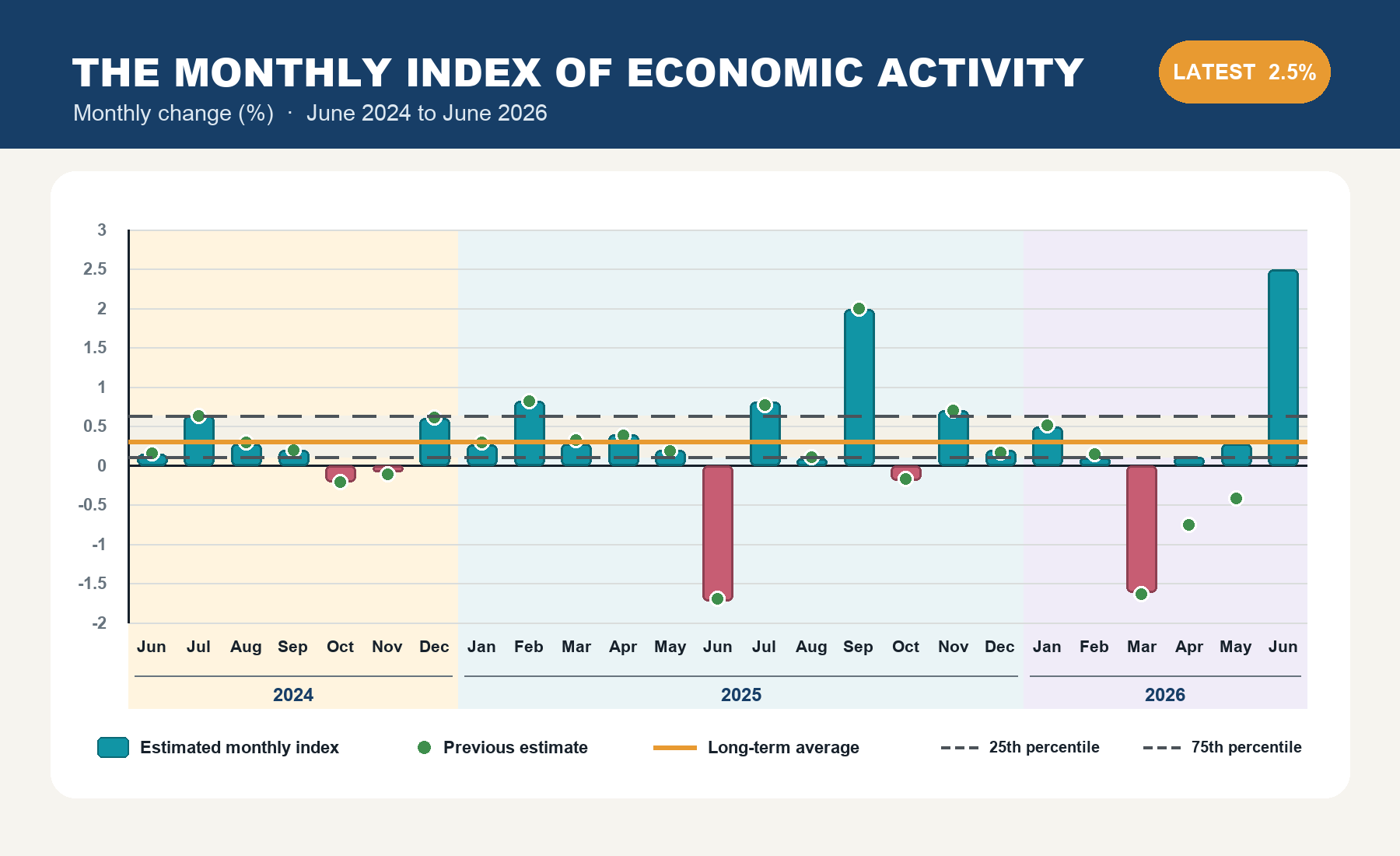
The monthly economic activity index rose by 2.5% in June, significantly above its long-term trend of approximately 0.3% per month. This increase was driven by several key components, including a rise in credit card purchases, a recovery in goods exports, higher industrial production, and improved revenues in trade and services. Together, these indicators suggest that both domestic and external demand are returning to stronger levels following a period of heightened uncertainty.
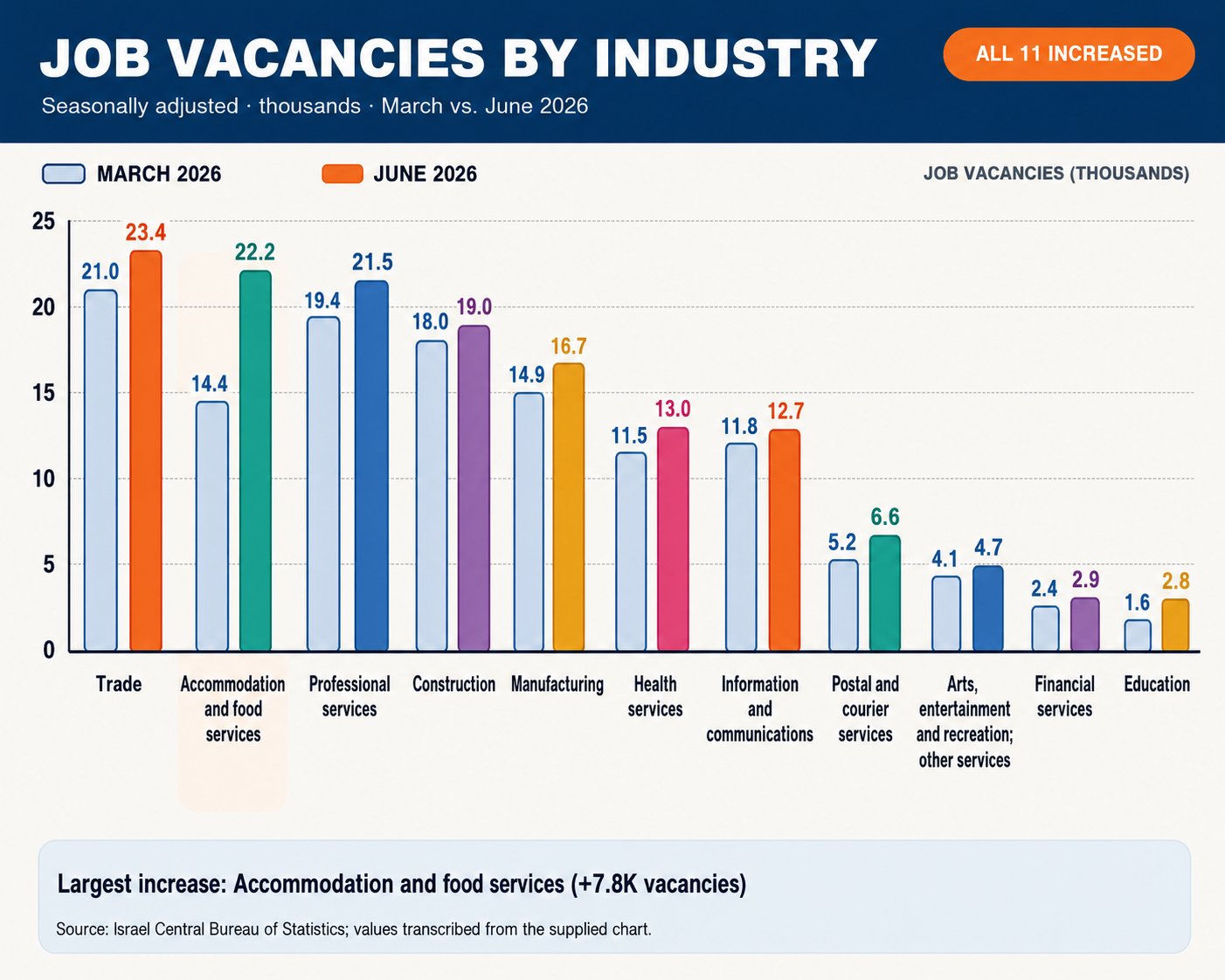
The labor market continues to tighten, with the number of job vacancies increasing to 145,666 in June, up from 138,724 in May, and the vacancy rate rising from 4.23% to 4.41%. Demand for workers has been particularly strong in hospitality and food services, where vacancies reached 22.2 thousand in June, compared to just 14.4 thousand in March. This trend reflects a recovery in sectors that were most affected during the conflict, alongside sustained demand for labor across the broader economy.
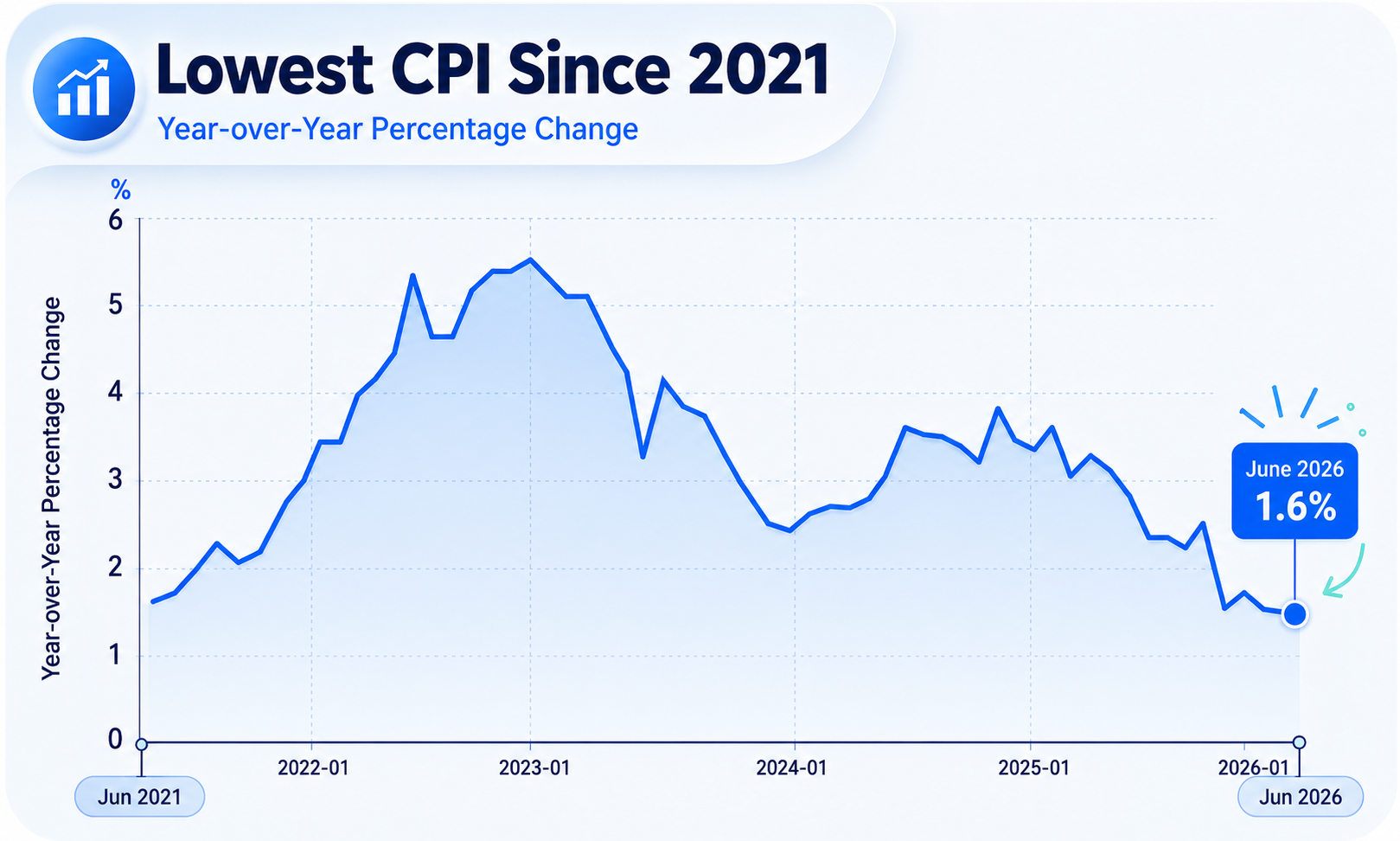
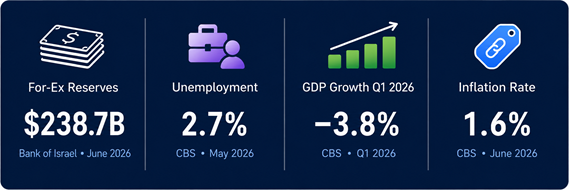
At the same time, the inflation environment remains moderate and supportive of economic activity. The Consumer Price Index was unchanged in June, while annual inflation eased to 1.6%. Trend data also points to subdued price pressures, with inflation averaging 1.7% between March and June, and core inflation excluding housing rising at a pace of just 1.2%. These figures reinforce the assessment that inflationary pressures are under control, providing greater flexibility for a more accommodative monetary stance.
International confidence in the Israeli economy remains stable. Moody’s reaffirmed Israel’s sovereign credit rating with a stable outlook and projects growth of 3.7% in 2026 and 5.0% in 2027, following 2.9% growth in 2025. This outlook points to continued recovery and expansion in the coming years, despite recent geopolitical challenges.
In parallel, the government is taking active steps to strengthen key growth engines. A support package totaling approximately NIS 1.2 billion has been approved for the high-tech, industrial, and export sectors. The program includes around NIS 1 billion in targeted grants for startups and growth companies, alongside approximately NIS 175 million in support for advanced industry and capital investment. The objective is to help firms contend with the strong shekel, improve productivity, expand into new markets, and maintain Israel’s competitive edge. In addition, a joint team from the Ministry of Finance and the Israel Innovation Authority is expected to formulate recommendations within 150 days for tax and regulatory reforms ahead of the 2027 budget.
Taken together, the data points to an economy that is demonstrating strong and rapid recovery capacity. Alongside stabilization following recent security events, there are clear signs of a renewed growth momentum, supported
by domestic demand, active business conditions, and a robust labor market.
Stay informed and stand with Israel,
Noach Hacker
|
Higher Demand for Workers |
Job vacancies increased to 145,666 in June from 138,724 in May, while the vacancy rate rose to 4.41% from 4.23%. Labor demand also strengthened across all 11 industries between March and June 2026. Accommodation and food services recorded the largest gain, rising from 14,400 to 22,200 vacancies, while trade had the highest June total at 23,400. |
For the first time since May 2021, Israel’s 12-month inflation rate fell to 1.6%, down from 1.9% in the previous month. From May to June 2026, prices declined for fresh vegetables and fruit by 5.2%, clothing and footwear by 2.7%, transportation by 0.7%, and furniture and home equipment by 0.5%, offsetting increases in other sectors.
|
Economic Activity Jumps 2.5% |
The monthly economic activity index surged by 2.5% in June, more than eight times its long-term trend of approximately 0.3% per month. This was the strongest monthly reading in the past two years, and marked a dramatic acceleration from May. The result is an exceptionally encouraging signal of renewed economic momentum and resilience.
|
|
|
|
|




.png)
.png)