Israel’s economy delivered a broadly positive picture this week, shaped by a more supportive monetary backdrop, continued strength in local capital markets,
sustained global demand for Israeli technology, and a strong shekel that is having an increasingly visible effect across the economy.
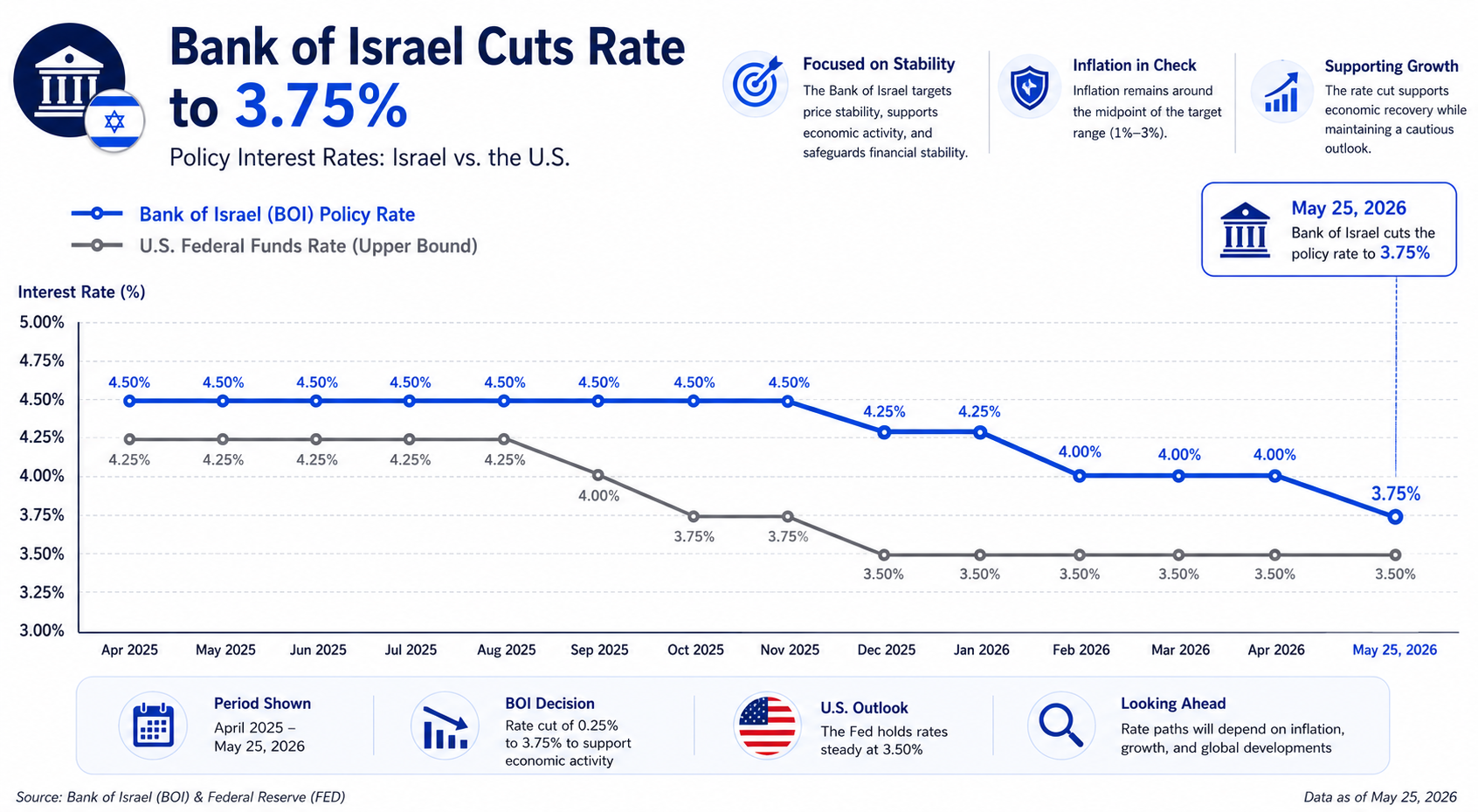
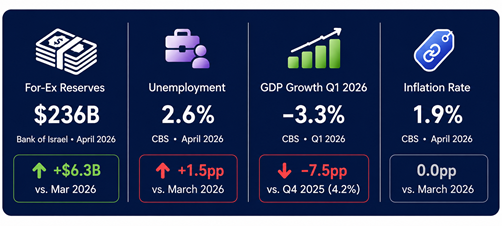
The Bank of Israel lowered its policy rate this week from 4.00% to 3.75%, as inflation remains close to the midpoint of the target range, at around 1.9%, and as signs of recovery in economic activity continue to emerge. The move
points to a somewhat more supportive policy environment after an extended period of relatively high interest rates aimed at containing inflation and preserving financial stability.
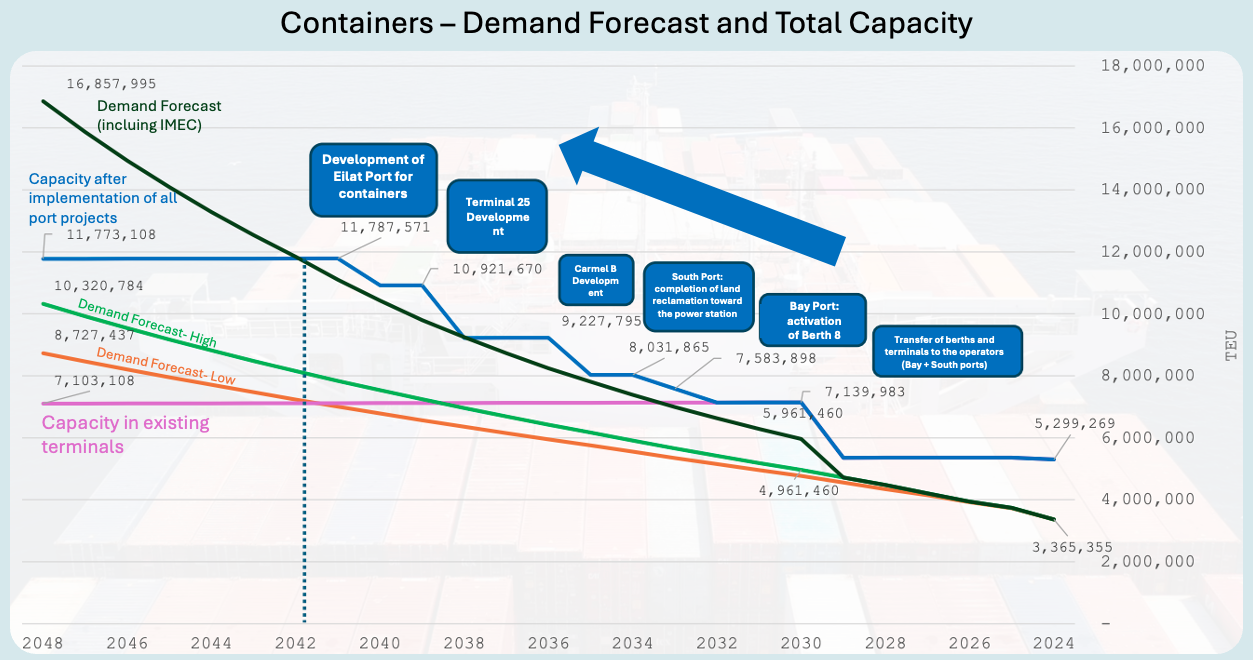
Israel’s Ministry of Transportation presented a national port infrastructure plan for international trade and the expected IMEC corridor, aiming to position Israel as a logistics hub between Asia, the Middle East, and Europe. The plan includes new port capacity, stronger links to seaports and border crossings, and land-port connections with Jordan, helping reduce bottlenecks and support long-term growth.
Israel’s high-tech sector also recorded another constructive week, with reported transactions and fundraising totaling roughly $360 million, underscoring continued international
demand for Israeli innovation. Recent developments were particularly notable in health technology, artificial intelligence, biotech, and other advanced technology segments, suggesting that even in a challenging
environment, Israeli companies continue to attract global attention and investment.
The Bank of Israel decided this week to require banks in Israel to enable contactless (Tap) cash withdrawals at their ATMs, using cards and digital wallets.
Beyond improving convenience and accessibility, the move marks another step forward for Israeli fintech and highlights how local technological innovation continues to shape the country’s financial infrastructure.
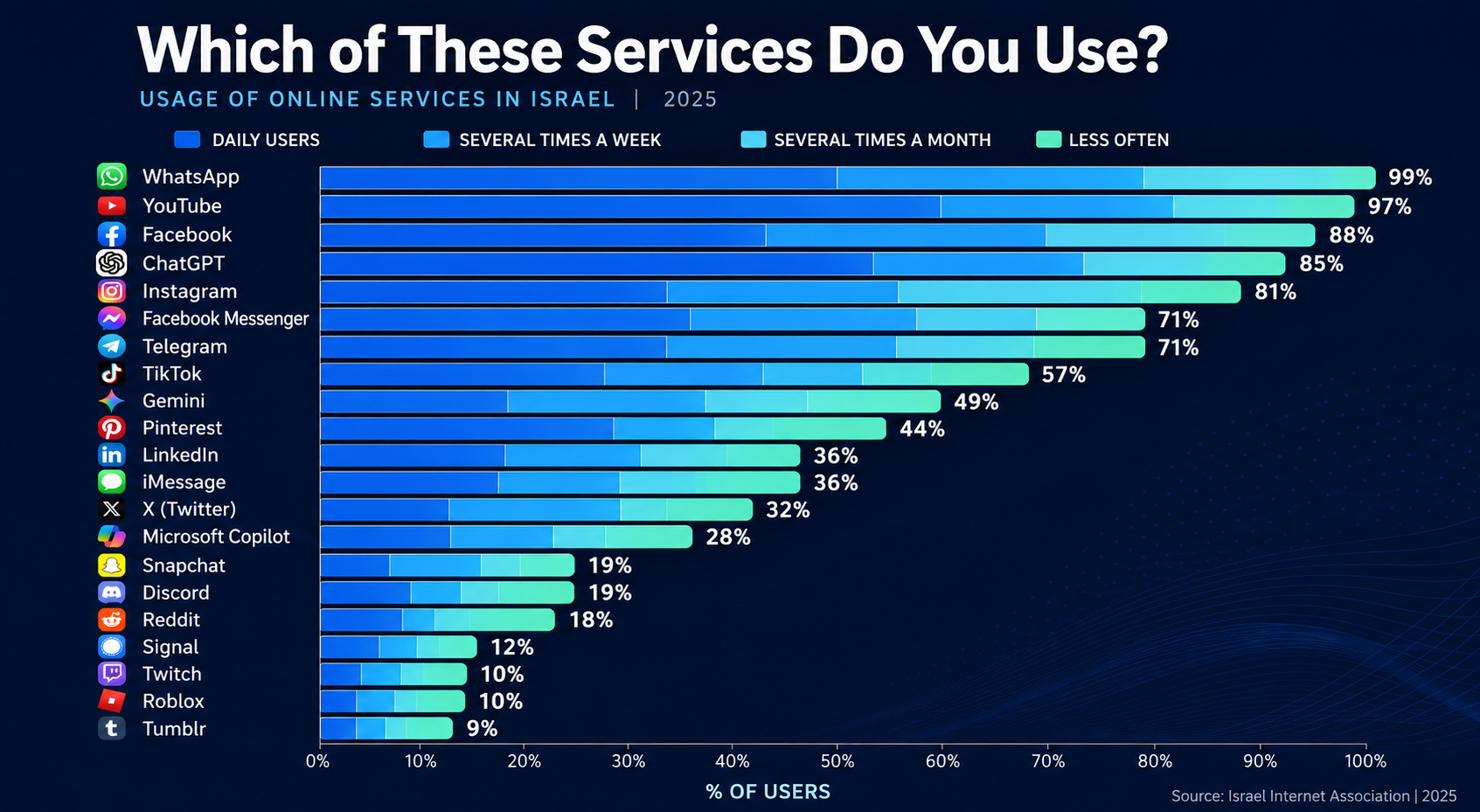
This trend fits into a broader pattern of digital adoption in Israel. According to 2025 data from the Israel Internet Association, the use of digital services remains exceptionally high, with broad penetration
of communication platforms, content services, and social media. The most striking figure is the adoption of artificial intelligence tools: ChatGPT usage reached 85% among Israeli adults, including 46% who
use it daily, an indication of how rapidly the public is adopting new technologies.
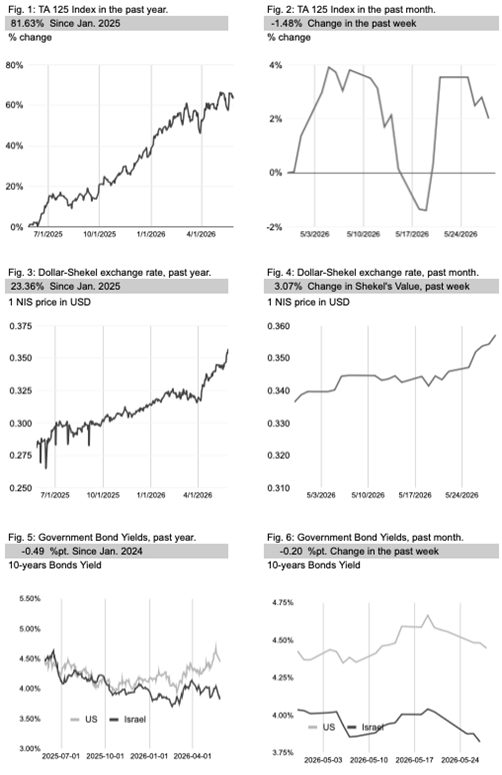
The central economic story in Israel this week, however, was the continued strengthening of the shekel, which is shaping the economy in two different directions. Since the previous interest rate decision,
the shekel has appreciated by 8.3% against the U.S. dollar and by 7.4% against the basket of traded currencies. Over the past month, it has continued to strengthen against the dollar despite the broader
global strength of the U.S. currency.
On one side, this is a positive development for the domestic economy. A stronger shekel helps reduce import costs, supports easing price pressures, and lowers the cost of foreign goods for households and
businesses. While gasoline prices have been rising in many parts of the world, fuel prices in Israel are expected to fall this week to below NIS 8 per liter, offering a clear example of how currency appreciation
can feed through relatively quickly into the cost of living.
At the same time, the same trend creates a challenge for exporters. As the shekel strengthens, Israeli companies selling abroad are forced either to raise prices in dollar terms or absorb pressure on profit
margins. The stronger currency therefore reflects both good news for consumers and growing strain for the export sector.
This tension is likely to remain central to Israel’s economic discussion in the coming weeks.





.png)