🛡️ Financial Stability Strengthens
💰 Budget Surplus
🚀 Consumer Confidence Rising
|
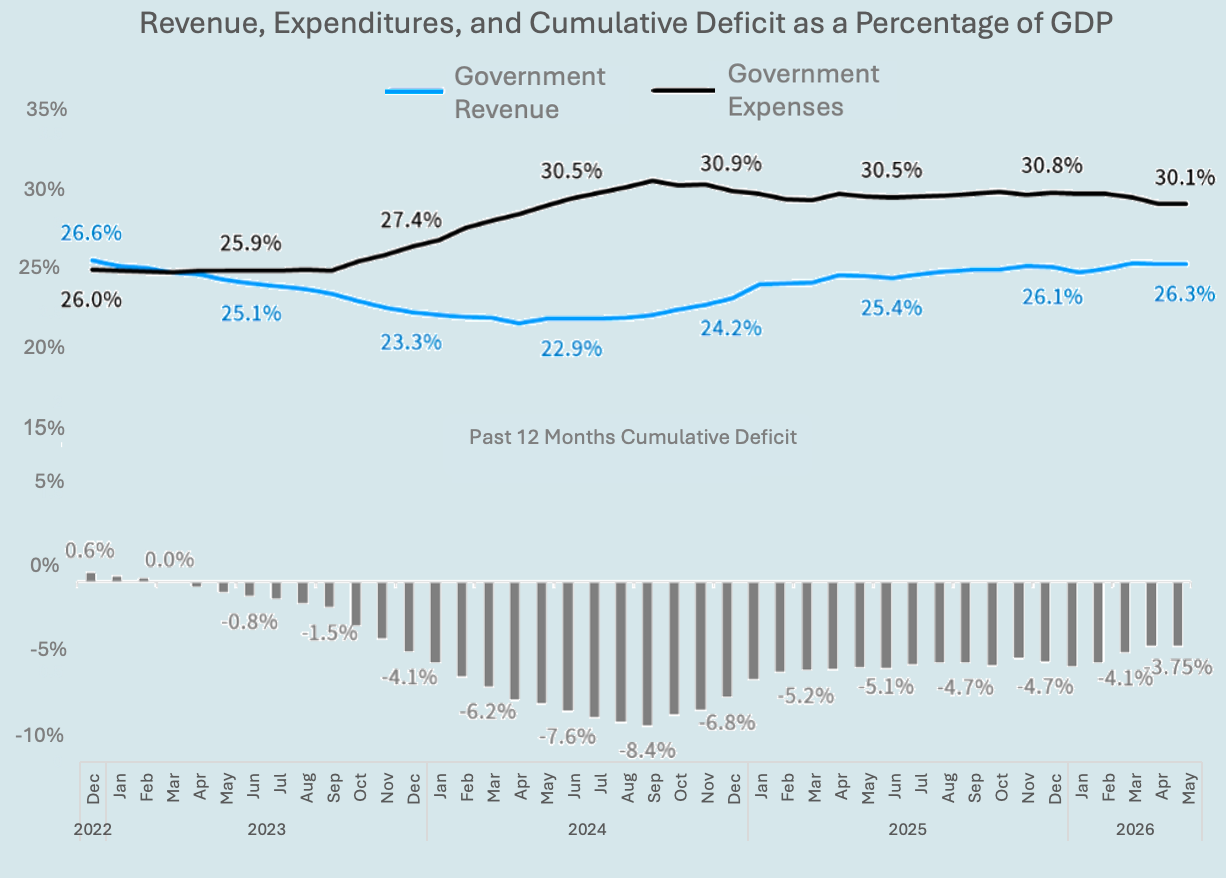
This week, Israel’s May budget performance figures were published, and the results were highly encouraging. Since the start of 2026, Israel’s budget has remained in surplus despite the ongoing war. This has been driven mainly by government revenues, which were approximately 8.8% higher than in the same period last year, while government spending rose at a much more moderate pace of 1.4%. As a result, the cumulative deficit over the past 12 months declined from 3.8% of GDP in the corresponding period last year to approximately 3.75% this year.
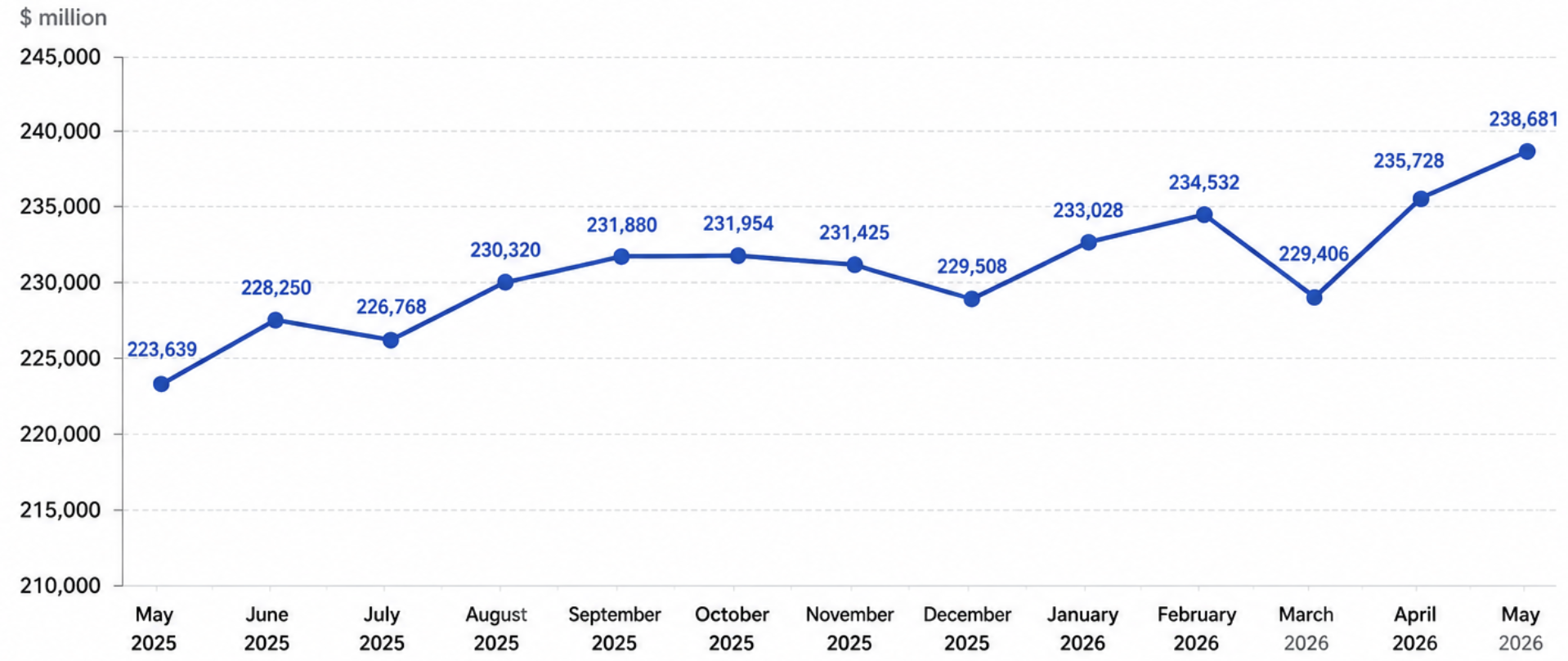
Additional data released this week also pointed to stronger financial resilience. Bank of Israel foreign exchange reserves stood at $238.7 billion at the end of May, an increase of about $3.0 billion compared with the end of April. Reserve levels were equal to 37.2% of GDP, continuing to provide the Israeli economy with a substantial financial buffer.
Consumer sentiment data published this week by the Central Bureau of Statistics (CBS) also pointed to a positive trend, with rising confidence among consumers regarding an improvement in their economic situation. In parallel, the CBS Business Tendency Survey showed improving conditions across nearly all sectors in May, including in tourism. Expectations for economic activity for the next month were also more positive than in the previous month. While the index has not yet returned to its pre-war level from February 2026, the direction remains clearly positive.
The housing market, meanwhile, continues to present a more mixed picture. Against the backdrop of the war with Iran, total home sales declined in March and April. In April, 5,081 homes were purchased, including both new and existing homes, down 19% from a year earlier. At the same time, relative to April 2025, transaction volumes in Jerusalem and Tel Aviv remained fairly stable, while the north recorded a notable increase.
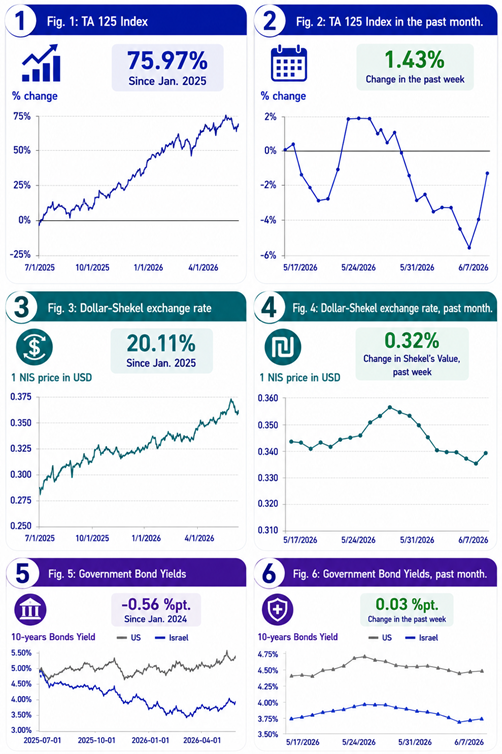
The shekel experienced volatility this week, and attention is now turning to next week’s inflation data. Together with the recent decline in energy prices in Israel and ongoing developments in the housing market, these figures are expected to play an important role in shaping the Bank of Israel’s upcoming interest rate decision.
Stay informed and stand with Israel,
Noach Hacker
|
In May, government revenues reached NIS 48.2 billion, bringing total revenues since the beginning of the year to 261.3 billion, an increase of about 8.8% compared with the same period previous year. At the same time, government expenditures since the beginning of the year totaled NIS 259.5 billion, reflecting a moderate increase of 1.4%. So far in 2026, government income is higher than expenses - which leads to a budget surplus, and the cumulative deficit over the past 12 months declined from 3.8% of GDP in the same period last year to 3.75%.
|
Consumer Confidence Rises |
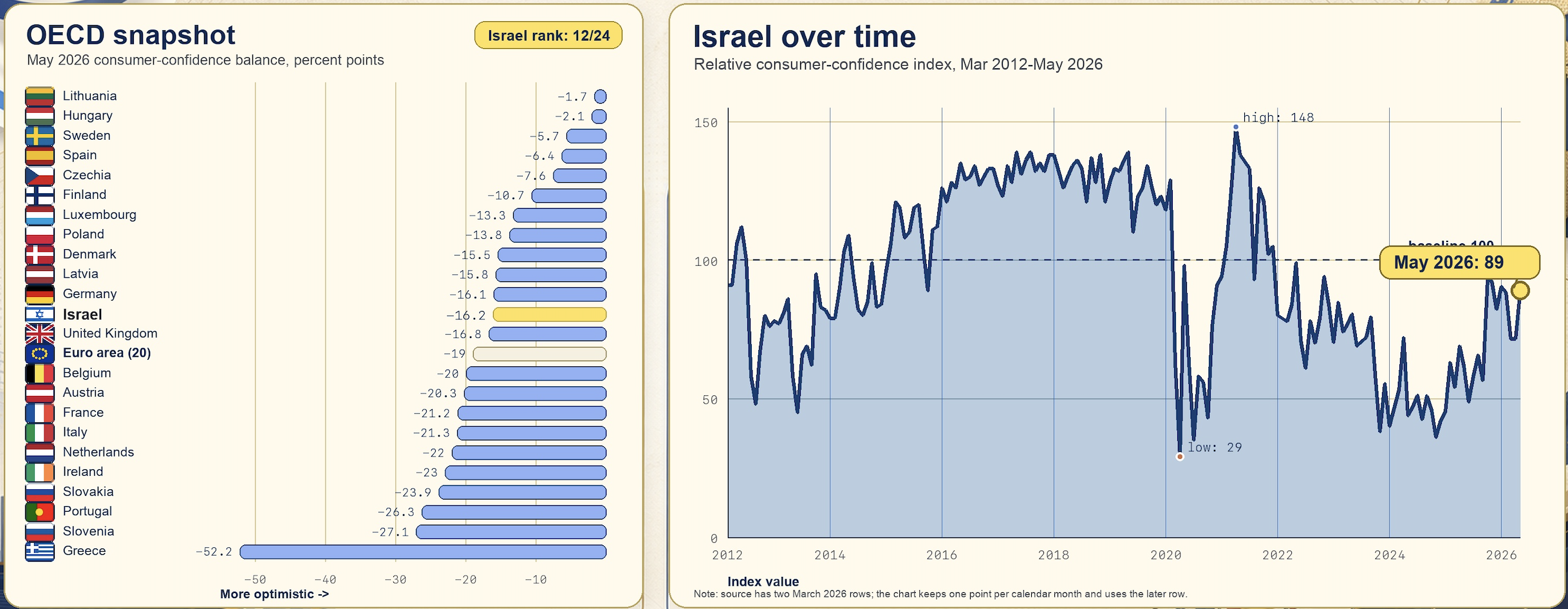
The Consumer Confidence Indicator rose from 72 to 89 in relative terms. This increase reflects an improvement in households’ assessment of their economic situation over the past 12 months, alongside stronger expectations for their own economic situation and for the Israeli economy over the next 12 months. In international comparison, Israel stands above the European Union average.
Consumer Confidence Index International Comparison & Adjusted CCI
|
Financial Stability Strengthens |
Israel’s foreign exchange reserves reached $238.7 billion at the end of May, up $2.95 billion from April and equal to 37.2% of GDP. The increase was driven mainly by revaluation effects and $801 million in foreign exchange purchases by the Bank of Israel.
Total Foreign Exchange Reserves |
|
|
|
|






.png)
.png)