💰 Government Surplus
💻 Digital Shekel Updates
🏆 A-Rated Economy |
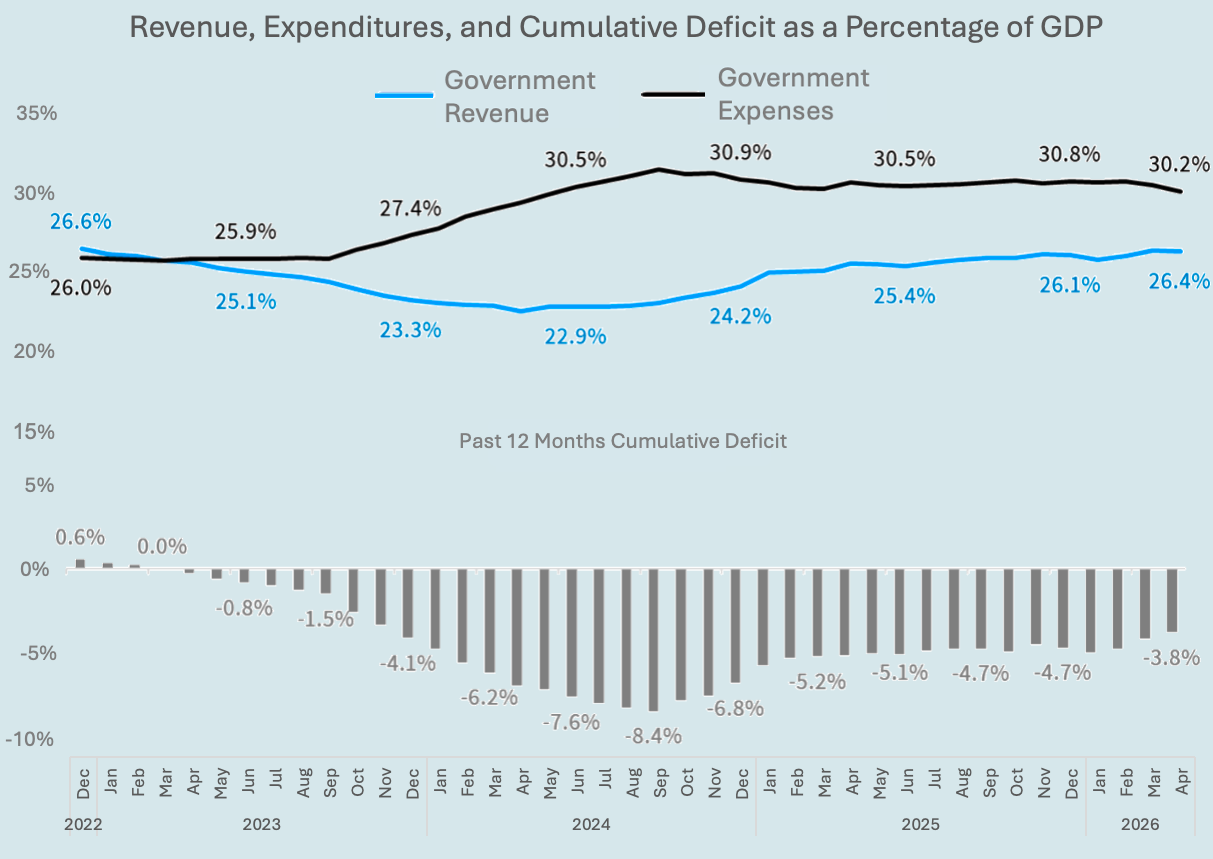
The main economic story in Israel this week is the picture emerging from the state budget execution data. According to the Accountant General at the Ministry of Finance, Israel has recorded a budget surplus of NIS 9.9 Bilion since the beginning of 2026, supported mainly by a 12% increase in state
tax revenues. At the same time, the deficit over the past 12 months has continued to decline, reaching approximately 3.8% of GDP, compared with 4.2% in March and 4.7% in February.
This fiscal improvement comes only a few days after S&P affirmed Israel’s sovereign credit rating at A, reflecting continued confidence in the country’s economic foundations. In its report, S&P noted that stronger-than-expected growth and fiscal outcomes could support a future rating upgrade. The latest
budget data points to the possibility that such a positive scenario could materialize.
Another significant development this week was Morgan Stanley’s decision to join Israel’s primary dealer program for Israel's government bonds, alongside the 12 banking institutions already participating
in the program. This step is expected to deepen Israel’s domestic debt market, improve trading volumes and liquidity, broaden the investor base, and help reduce the government’s financing costs over time.
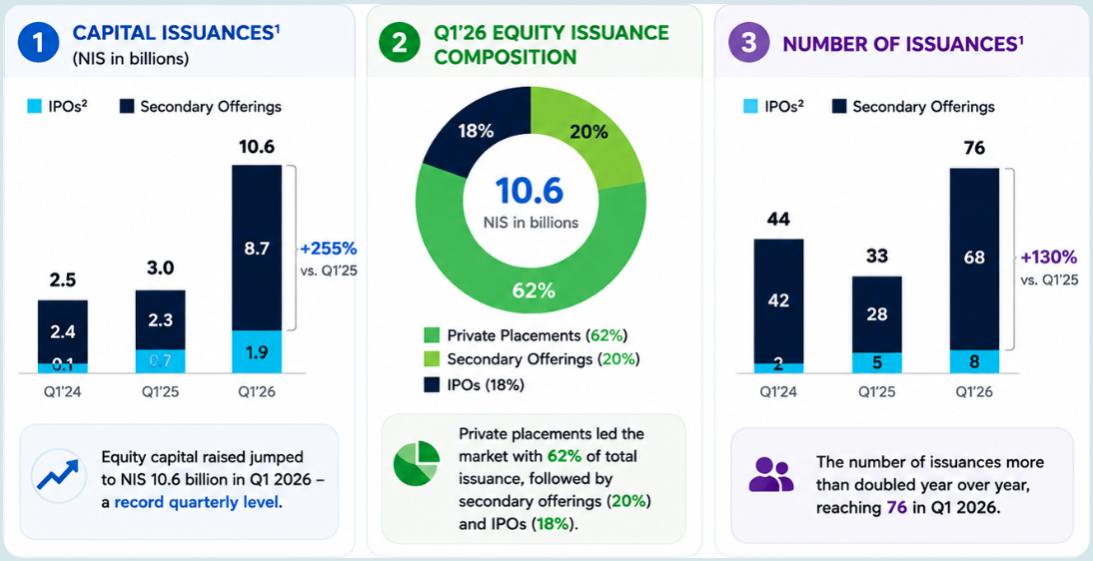
The Israeli capital market is also continuing its strong momentum. According to the Tel Aviv Stock Exchange’s latest quarterly update, equity fundraising in the first quarter of 2026 reached NIS 10.6 billion,
three times higher than in the first quarter of 2025. The number of equity offerings also increased sharply, from 33 in the first quarter of 2025 to 76 in the first quarter of 2026. Together, these figures
point to renewed investor appetite and a stronger role for the local market in financing business growth.
This week also brought an important update from the Bank of Israel on its work examining the possible issuance of a digital shekel (CBDC). Over the past
year, the professional team conducted a cost-benefit analysis, assessing the expected costs to the Bank of Israel, system participants, and the broader economy, based on the initial design of a potential
digital shekel. The team concluded that the expected benefits exceed the costs, and that issuing a digital shekel would be worthwhile from the perspective of overall economic welfare. The Bank of Israel
also examined the possible regulatory structure of the digital shekel system and continued reviewing its technological feasibility.
By the end of the year, the team is expected to focus on a more detailed design process and possible implementation paths. The insights from these efforts, together with additional planned technological experiments, will be added to the findings accumulated throughout the project and compiled into a report for the Governor of the Bank of Israel. That report will include a recommendation on whether Israel should move forward with issuing a digital shekel.
Finally, today the Jewish people celebrate Jerusalem Day, marking a city of unique significance to the Jewish people. I wish you all a happy Jerusalem Day.
Stay informed and stand with Israel,
Noach Hacker
|
Israel’s 12-month fiscal deficit fell to 3.8% of GDP in April, down from 4.2% in March and 4.7% in February. Government revenue now stands at 26% of GDP, while expenses are at 30%. The improvement was driven by stronger tax revenues, with tax receipts up 12% year on year, while government expenses rose by only 0.2%.
|
Capital issuances on the Tel Aviv Stock Exchange reached NIS 10.6 billion in Q1 2026, according to TASE’s Q1 2026 report, triple the amount raised in Q1 2025. Private placements accounted for 62% of the total, while IPOs represented 18%. The number of issuances also increased sharply, rising from 33 in Q1 2025 to 76 in Q1 2026.
(1) Includes Private Placements (2) Excludes companies that were listed without raising capita |
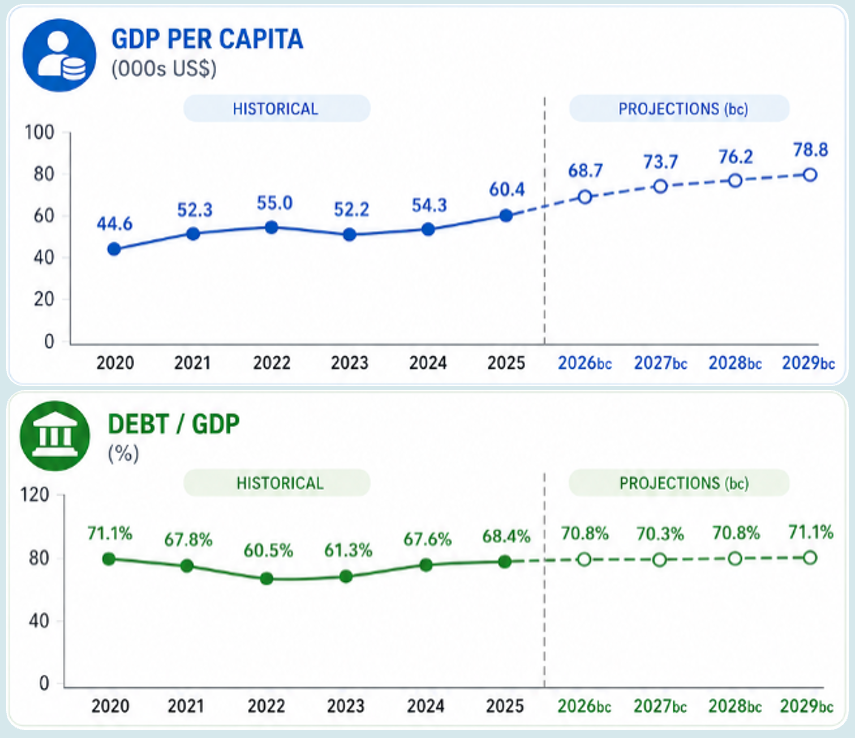
S&P reaffirmed Israel’s credit rating at A, pointing to Israel’s strong income base and growth potential. GDP per capita is projected to rise from $60.4 thousand in 2025 to $78.8 thousand in 2029, while real GDP growth is expected to reach 5.9% in 2027. Public debt is projected to remain manageable, around 68%-71% of GDP through 2029.
*bc = Base Case projections |
|
|
|
|






.png)