📈 GDP Resilience in Q1
💼 Worker Demand Rising
🤖 Supporting AI Leadership
|
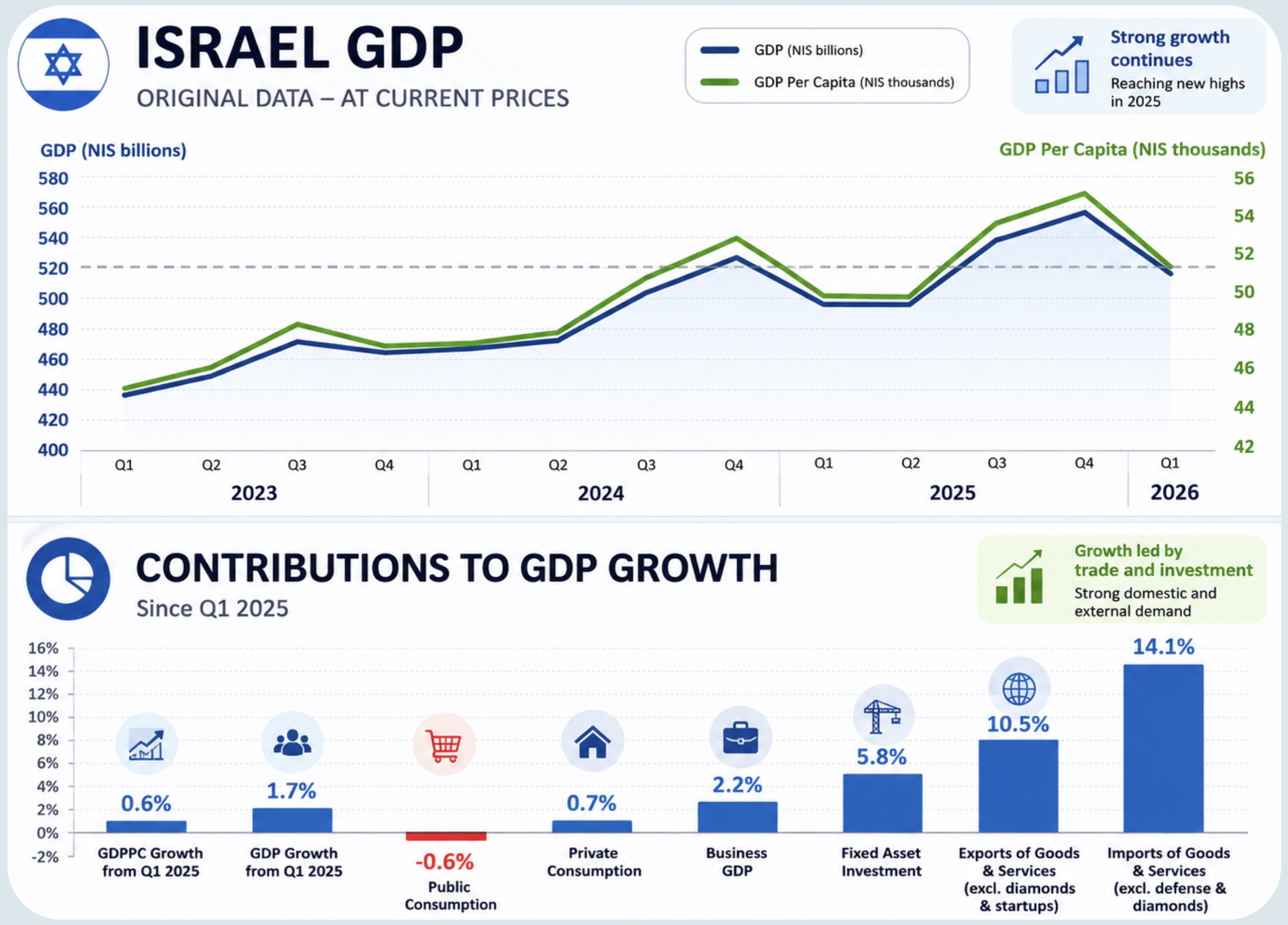
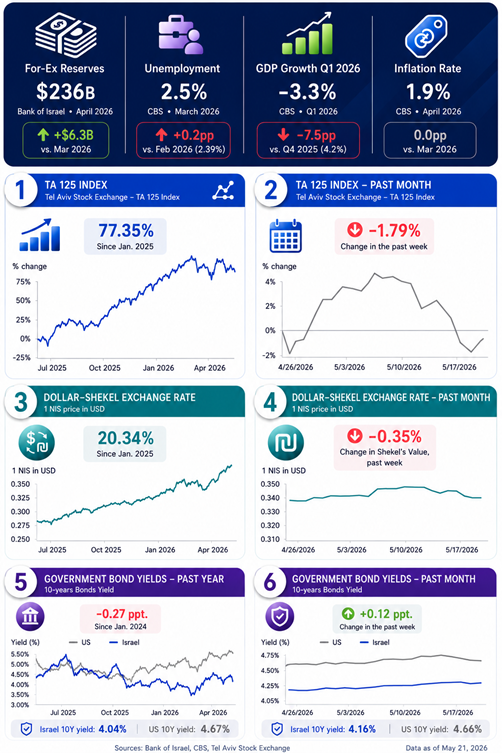
This week’s economic data provides a first clearer look at how the fighting in March affected Israel’s economy in the first quarter of the year. According to the Central Bureau of Statistics’ national accounts data, GDP declined by 3.3% in the first quarter, reflecting the direct impact of the war with Iran. Yet the broader picture remains more balanced: compared with the first quarter of last year, GDP increased by 1.7%, while GDP per capita rose by 0.6%. In other words, the quarterly
shock was significant, but the wider trend still points to an economy that continues to grow under pressure.
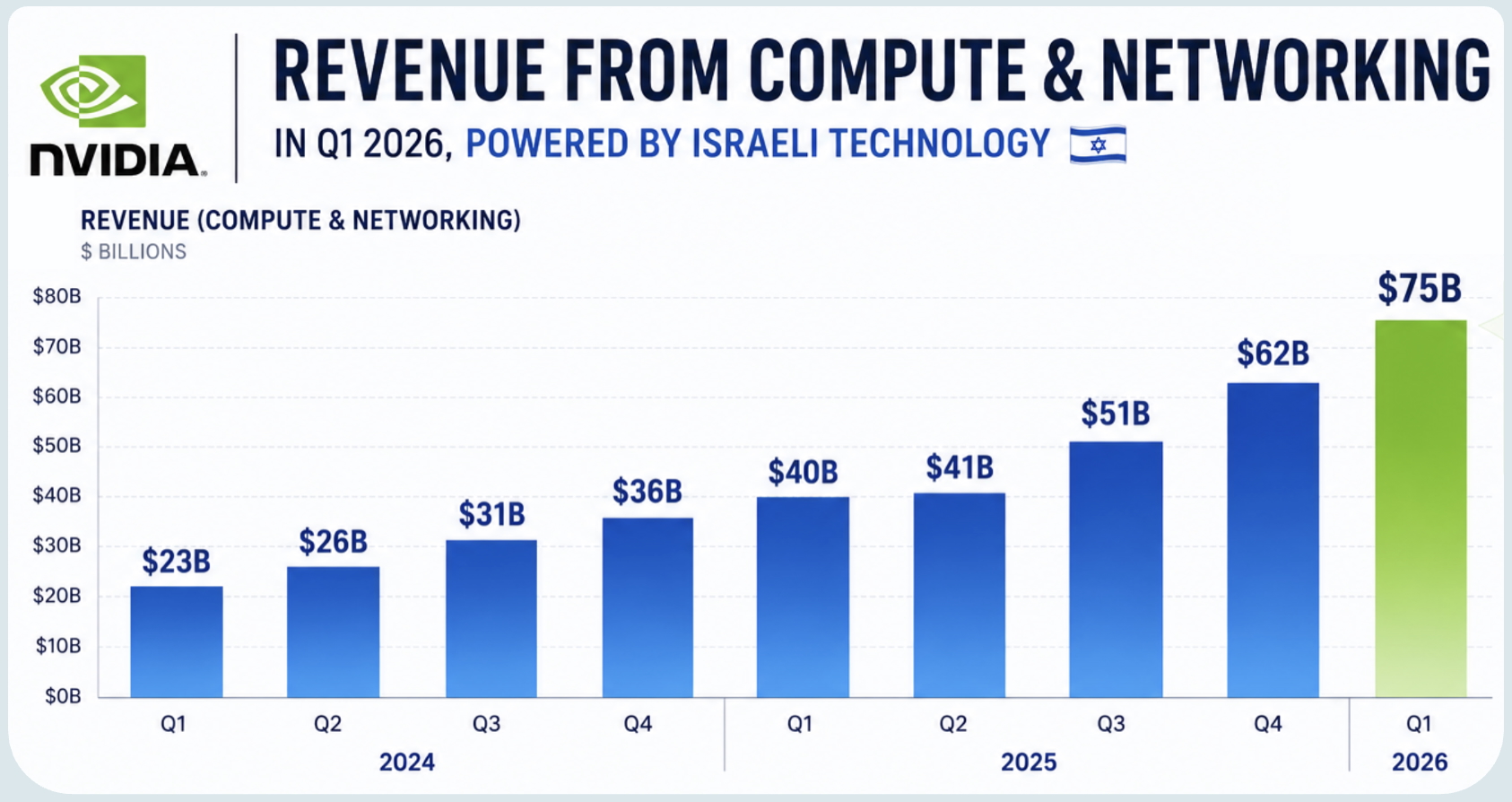
NVIDIA’s Q1 FY2027 results offer a striking example of how Israeli innovation is helping power American leadership in AI. Data Center Networking segment revenue reached a record $14.8 billion, up 199% from a year earlier and 35% from the previous quarter. NVIDIA’s networking platforms are built in large part on technologies developed in Israel by Mellanox and enhanced by Israeli employees at NVIDIA’s R&D center in Israel after Mellanox was acquired by NVIDIA. This showcases the centrality of Israeli innovation and skills in the AI era. More broadly, this is also a story about the economic value of U.S.-Israel technological cooperation. Israeli innovation strengthens leading American companies, supports government revenues and high-quality jobs in the United States, and helps turn the bilateral technology partnership into a growth engine for both economies.
At the same time, Israel’s labor market remains strong. The number of job vacancies increased, including higher demand for high-tech positions, engineers, and software developers. Labor force participation edged up to 62%, while the unemployment rate rose only slightly to 2.9%, still a very low level by international standards. These figures suggest that despite the security-related disruption, business demand for workers remains resilient.
Inflation expectations for the coming year also moved slightly lower, reaching 1.8%, a level within the Bank of Israel’s price stability target range. This supports a more stable macroeconomic environment and adds to the picture of an economy that is absorbing shocks while maintaining important anchors of stability.
Finally, ahead of Shavuot, new data also highlighted the continued leadership of Israel’s dairy sector. Milk production in Israel increased in 2025, while average output per cow continues to place Israel as the world leader in dairy productivity. Happy Shavuot!
Stay informed and stand with Israel,
Noach Hacker
|
In Q1 2026, Israel’s GDP declined by 3.3% at an annualized rate due to the impact of the Iran war in March. Still, the broader trend points to growth: compared with Q1 2025, GDP increased by 1.7%, while GDP per capita rose by 0.6%. The quarterly decline mainly reflects a temporary disruption to activity, with private and public consumption falling, while fixed investment increased by 12.6% and exports rose by 5.6%.
|
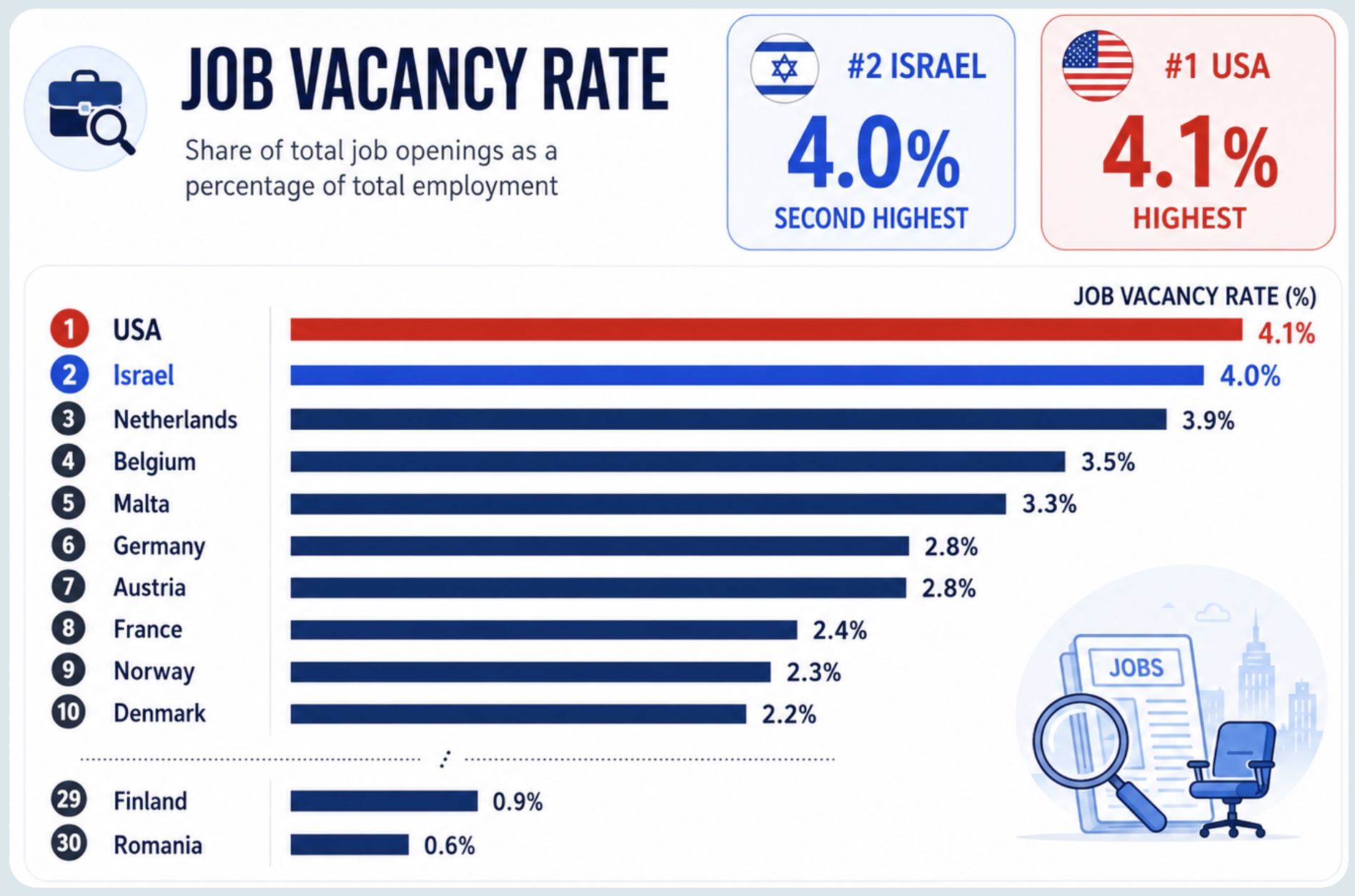
Demand for workers in Israel strengthened in April, with job vacancies rising from 124,000 in March to 131,000. The job vacancy rate also increased, from 3.88% to 4.04%. The rise was especially strong in high-skill roles, with vacancies for engineers and software developers up 4%. Internationally, Israel’s vacancy rate remains high, very similar to the rate of the U.S. and higher than European countries - where the EU job vacancy rate was 2.0% in Q4 2025.
|
Supporting US AI Leadership
|
NVIDIA’s Q1 FY2027 financial report show Data Center Networking revenue reached $14.8 billion, up 199% year over year and 35% from the previous quarter. For Israel, this is especially meaningful: NVIDIA’s networking business is rooted in Mellanox, the Israeli company it acquired for $6.9 billion, placing Israeli innovation at the core of global AI infrastructure.
|
|
|
|
|






.png)