💰 Budget Surplus
📈 GDP Per Capita Rising
💵 Shekel Hits 30-Year High
|
This week, against the backdrop of the key global economic event of the season, the Spring Meetings of the International Monetary Fund and the World Bank, a series of striking indicators underscored the resilience of Israel’s economy.
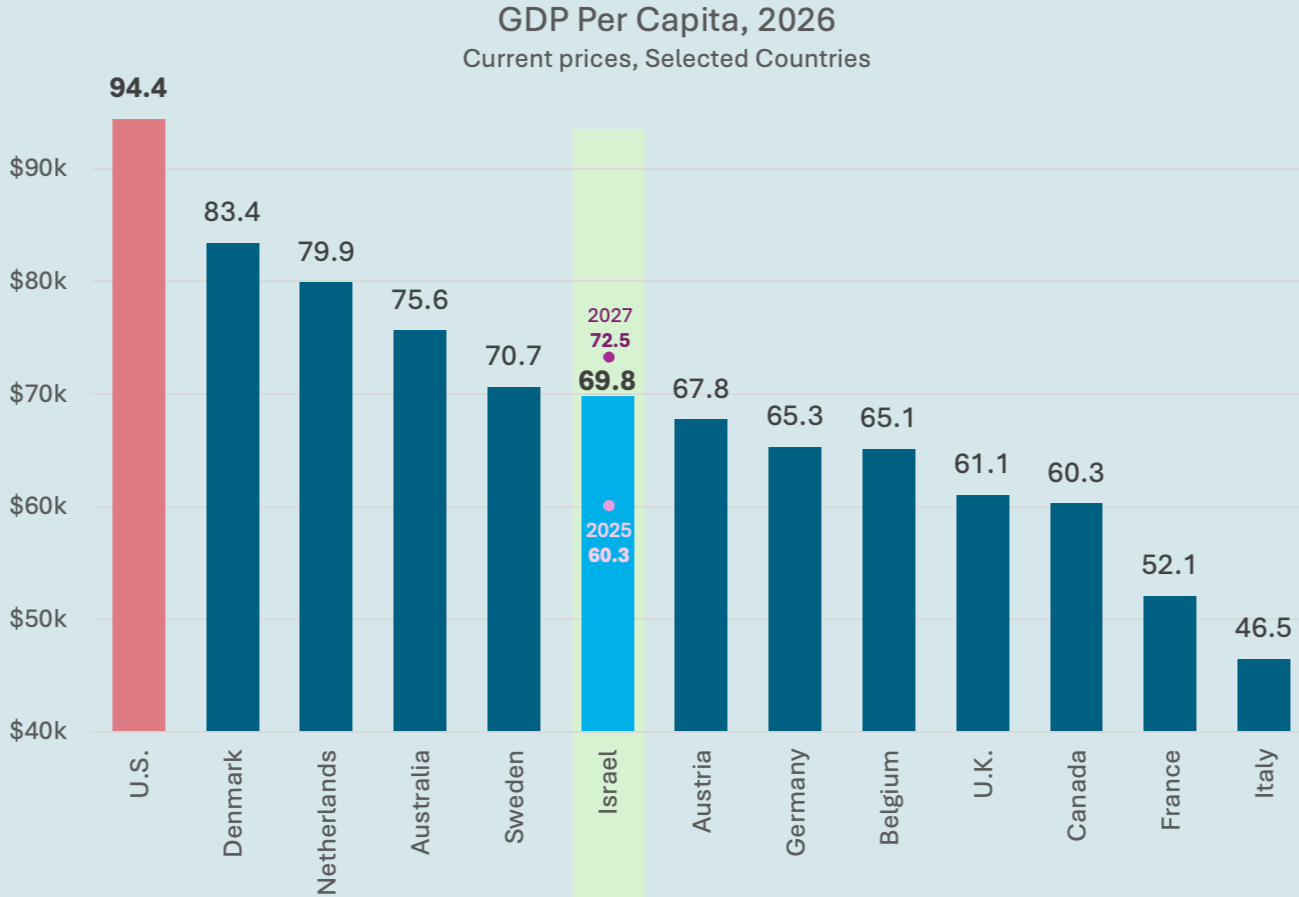
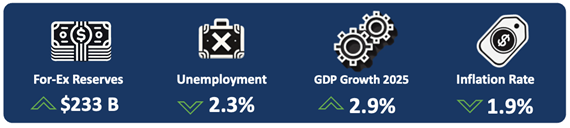
The IMF this week published its latest global growth forecasts, prepared amid the war in the Middle East and the global energy crisis. While the growth outlook for a number of countries was revised significantly compared with the previous forecast, Israel’s economic outlook remained strong and stable. The IMF projects growth of 3.5% in 2026 (down from its previous forecast of 3.9%) and 4.4% in 2027 (up from its previous forecast of 3.3%). In addition, per capita GDP figures remain especially encouraging, pointing to a meaningful rise in recent years and expectations for that trend to continue, reaching $69.8 thousand in 2026 and more than $72 thousand in 2027.
According to data published by Israel’s Central Bureau of Statistics, the annual inflation rate declined to 1.9%, slightly below the midpoint of the Bank of Israel’s target range of 1% to 3%.
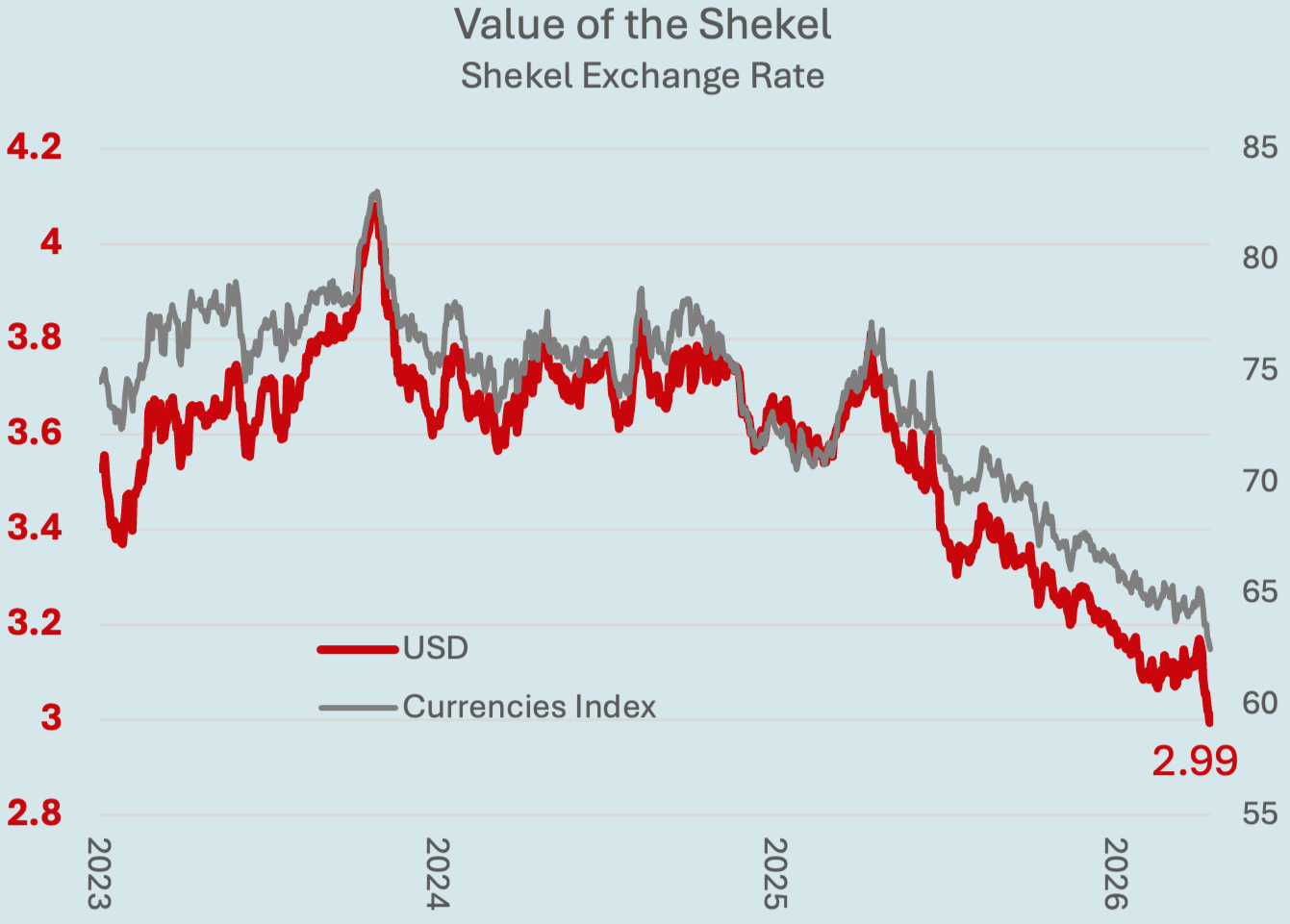
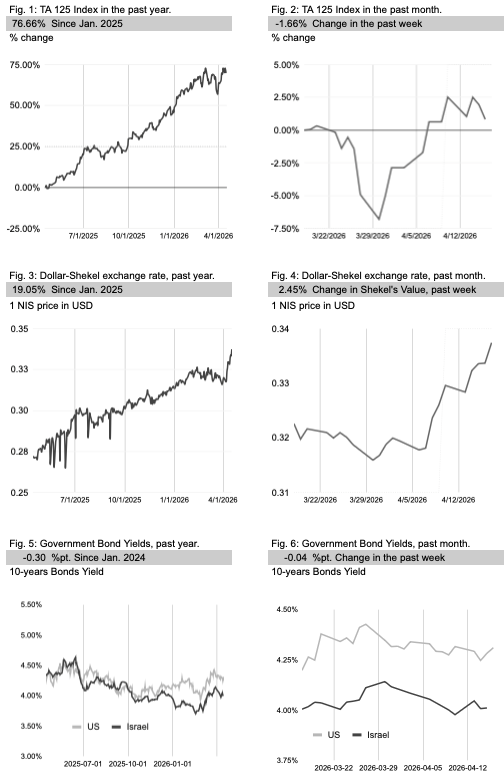
In another dramatic economic development, and for the first time since the mid-1990s, the shekel strengthened to the point that it is trading under 3 shekels for 1 U.S. dollar.
This week, the Ministry of Finance also published its estimate of the cost of the “Roaring Lion” war. According to the release, the total direct cost for the Israeli government is estimated at approximately 35 billion NIS ($12B USD) since war broke out in late Feburary.
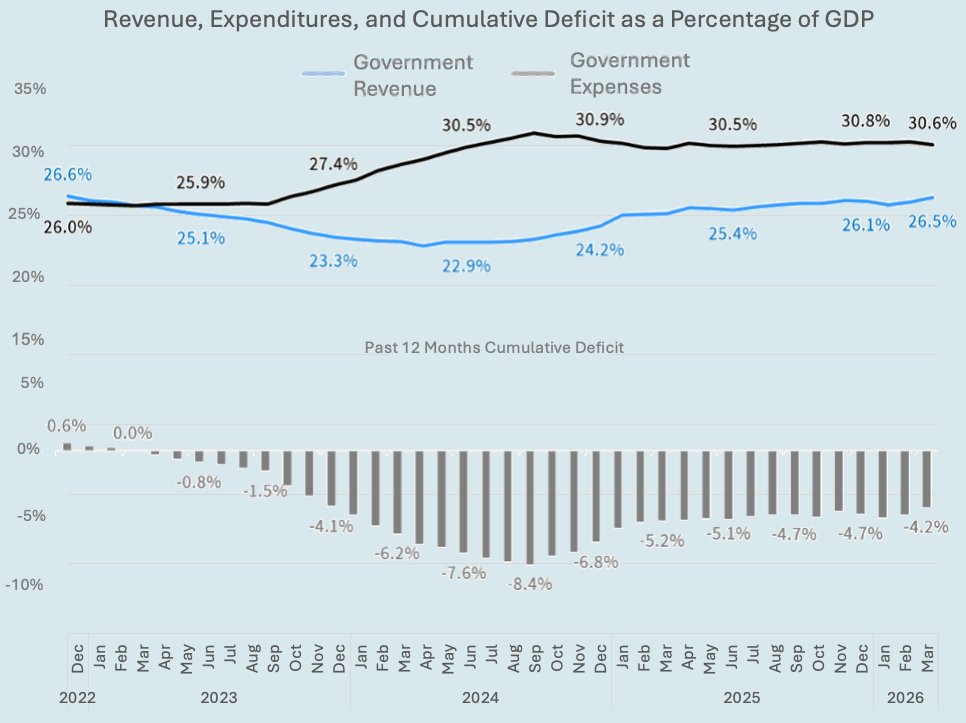
The Ministry of Finance also released the March budget execution data. According to these figures, the cumulative deficit over the past 12 months declined to 4.2% of GDP, a decrease of 0.5 percentage points compared with the end of February. The deficit in March stood at NIS 1.6 billion, compared with NIS 13.1 billion in March 2025. Since the beginning of the year, a cumulative surplus of NIS 12.9 billion has been recorded, compared with a surplus of only NIS 3.9 billion in the same period last year. State revenues since the beginning of the year totaled NIS 162.5 billion, an increase of 10.4% compared with the same period last year. Tax revenues rose by 10.8%, including a 12.9% increase in direct taxes and a 7.2% increase in indirect taxes.
The housing market also showed signs of renewed momentum. Between December 2025 and February 2026, approximately 14.8 thousand second-hand apartments were sold, an increase of 18.1% compared with the previous three-month period. This points to a return of activity in the housing market. At the same time, the supply of new homes remained high, with approximately 85,920 new apartments still available for sale at the end of February 2026.
The year 2025 marked the third full year of activity for the Israel Citizens Fund, the sovereign wealth fund built on state revenues from natural gas. As of December 31, 2025, the fund’s assets stood at approximately $2.8 billion. In 2025, the Israel Citizens Fund posted a nominal dollar return of approximately 18.4% and a real dollar return of 15.4%.
Stay informed and stand with Israel,
Noach Hacker
|
Since the start of 2026, government revenues have grown by a robust 10.4% compared with the same period last year, while spending has risen at a more moderate 4.3%. Over the past 12 months, government spending has amounted to 30.6% of GDP, while state revenues have reached 26.5% of GDP, bringing the cumulative deficit down to 4.2% of GDP. This represents an improvement of 0.5 percentage points from the end of February.
|
GDP Per Capita on the Rise
|
The IMF’s latest outlook points to a steady rise in Israel’s GDP per capita over the next few years, placing it alongside advanced European economies and ahead of many countries worldwide. GDP per capita is projected to increase from $60.4k in 2025 to about $69.8k in 2026, surpassing countries such as Germany, Austria, and Belgium. It is expected to continue rising to $72.5k in 2027 and $74.7k in 2028.
|
The shekel has strengthened in recent months, trading below 3 per dollar for the first time since 1995 and rising against a broad index of currencies used by Israel’s main trading partners. While this can help lower the cost of imports and raw materials for Israeli consumers, it may also hurt exporters by making Israeli goods less competitive abroad.
|
|
|
|
|






.png)