🦁 4th Week of War
💎 Net Assets at Record High
📈 Business Revenue Up
|
This is week Four since the start of Operation “Roaring Lion” / "Epic Fury". According to Israel’s Ministry of Defense, since the start of the operation, 200 shipments carrying a total of approximately 8,000 tons of military equipment, weapons, and munitions have arrived in Israel to support the defense of Israeli civilians and the ongoing war effort in coordination with the United States. At the same time, efforts are continuing to expand Israel’s domestic defense manufacturing base and accelerate production across the country’s defense industries.
Today, Fitch reaffirmed Israel’s ‘A’ sovereign credit rating. Fitch highlights ongoing challenges, including elevated security risks, large fiscal deficits, and rising debt pressures, which keep the outlook negative. At the same time, the report reflecting confidence in the country’s core strengths, including its resilient, diversified, high value-added economy and strong external finances. The report also notes Israel’s strong regional position, with recent military operations helping reduce some geopolitical risks.
On the budgetary front, legislative steps advanced this week toward approval of the 2026 state budget, alongside progress on legislation aimed at supporting workers whose incomes were harmed by the war.
Israel’s foreign trade data continues to signal resilience, with the high-tech sector standing out as a clear source of strength. Goods exports to the United States rose by 5.4% at an annual rate during the December to February period, while goods imports from the United States to Israel increased by 3%, following a 7.4% rise in the preceding period. In February, Israel’s total export of goods reached NIS 13.3 billion, while imports stood at NIS 27.1 billion, excluding diamonds.
Services exports also posted another gain in January, rising by 2.5% to $8.7 billion after a 1.7% increase in the previous month. Within that, high-tech services exports increased by 1.5%, following a 3.3% rise a month earlier. These figures exclude startup company exports, which totaled $263 million in January.
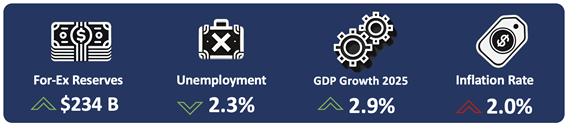
The Bank of Israel’s 2025 annual report, published this week, underscores the resilience of Israel’s macroeconomic fundamentals, including 2.9% growth, declining inflation, strong stock market performance, an appreciating shekel, and continued expansion in the high-tech sector. The report also places Israel’s final 2025 debt-to-GDP ratio at 68.5%, keeping it among the OECD’s leading economies despite the prolonged war. The report further notes continued growth in both exports and imports toward the end of 2025.
On the broader economic impact of the prolonged fighting, the central bank estimates that the war reduced the country’s economic output by NIS 177 billion from its onset through the end of 2025. According to the Bank, the main driver was a decline in the number of workers during the war, with the foreign worker component identified as the most significant factors - especially in the construction sector. At the same time, the report points to a recovery in foreign employment, marked by a sharp decline in Palestinian workers, alongside an even larger increase in workers arriving from other countries. Based on the Bank’s analysis, since July 10, 2023, the total number of foreign workers employed in Israel has increased by 4%, from approximately 257,000 to 269,000.
Additional data published this week by the Central Bureau of Statistics points to a 3% increase in business revenue across the economy in 2025, and an 11.2% increase in high-tech sector revenue. The trend over the most recent months, from November 2025 to January 2026, shows an 8.4% annualized increase in total business revenue across the economy, following an 11.4% increase in the preceding period. At the same time, the unemployment rate declined in February and now stands at just 2.3%.
Stay informed and stand with Israel,
Noach Hacker
|
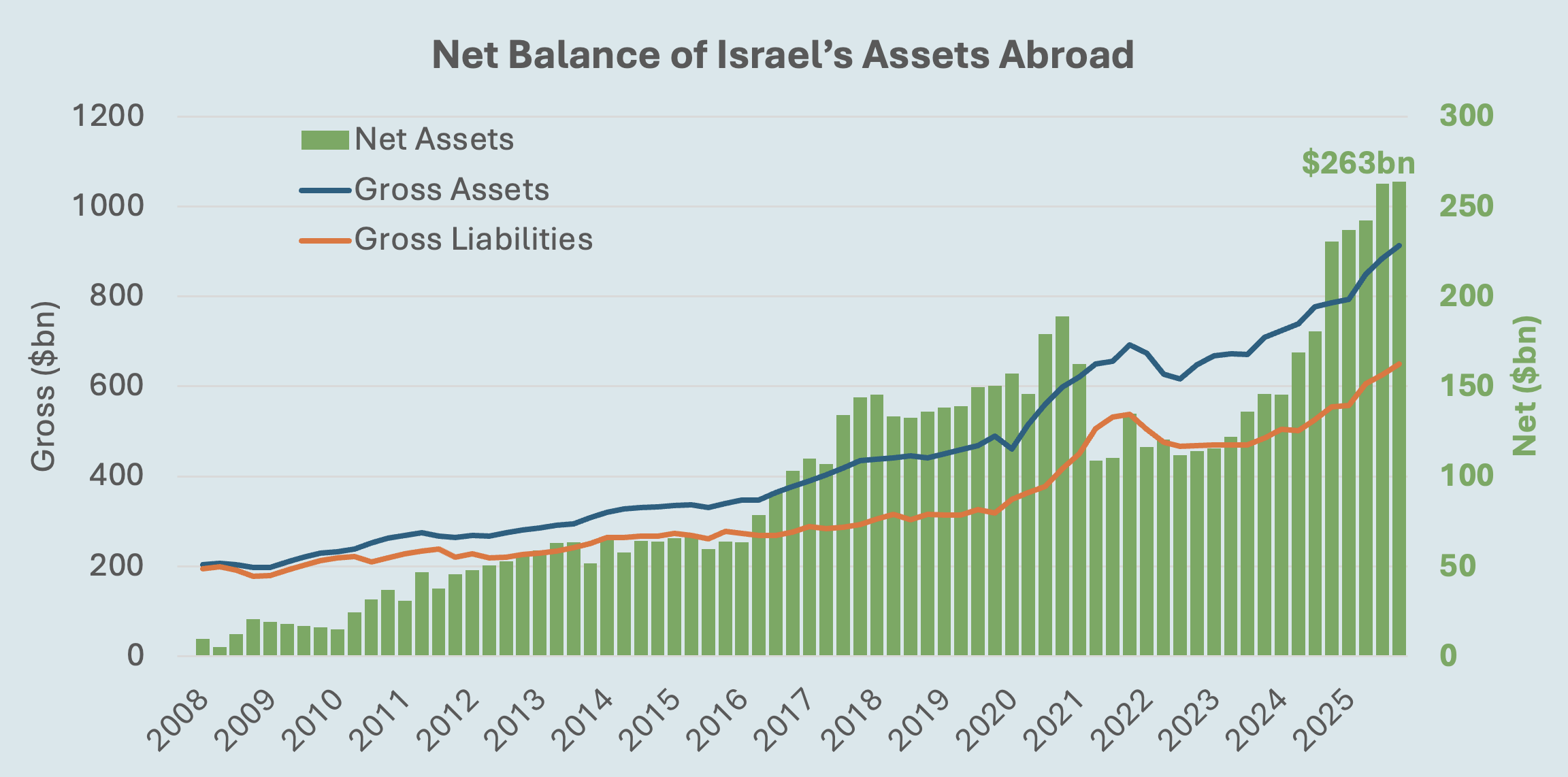
Israel’s net foreign asset position reached $263 billion at the end of December, up about $1 billion, or 0.3%, from the previous quarter. The gain reflects faster growth in Israeli assets abroad than in foreign liabilities in Israel. Over time, this steadily widening surplus highlights strong capital accumulation and external resilience, reinforces Israel’s position as a net global creditor, and supports long-term financial stability.
|
Record-High Defense Exports |
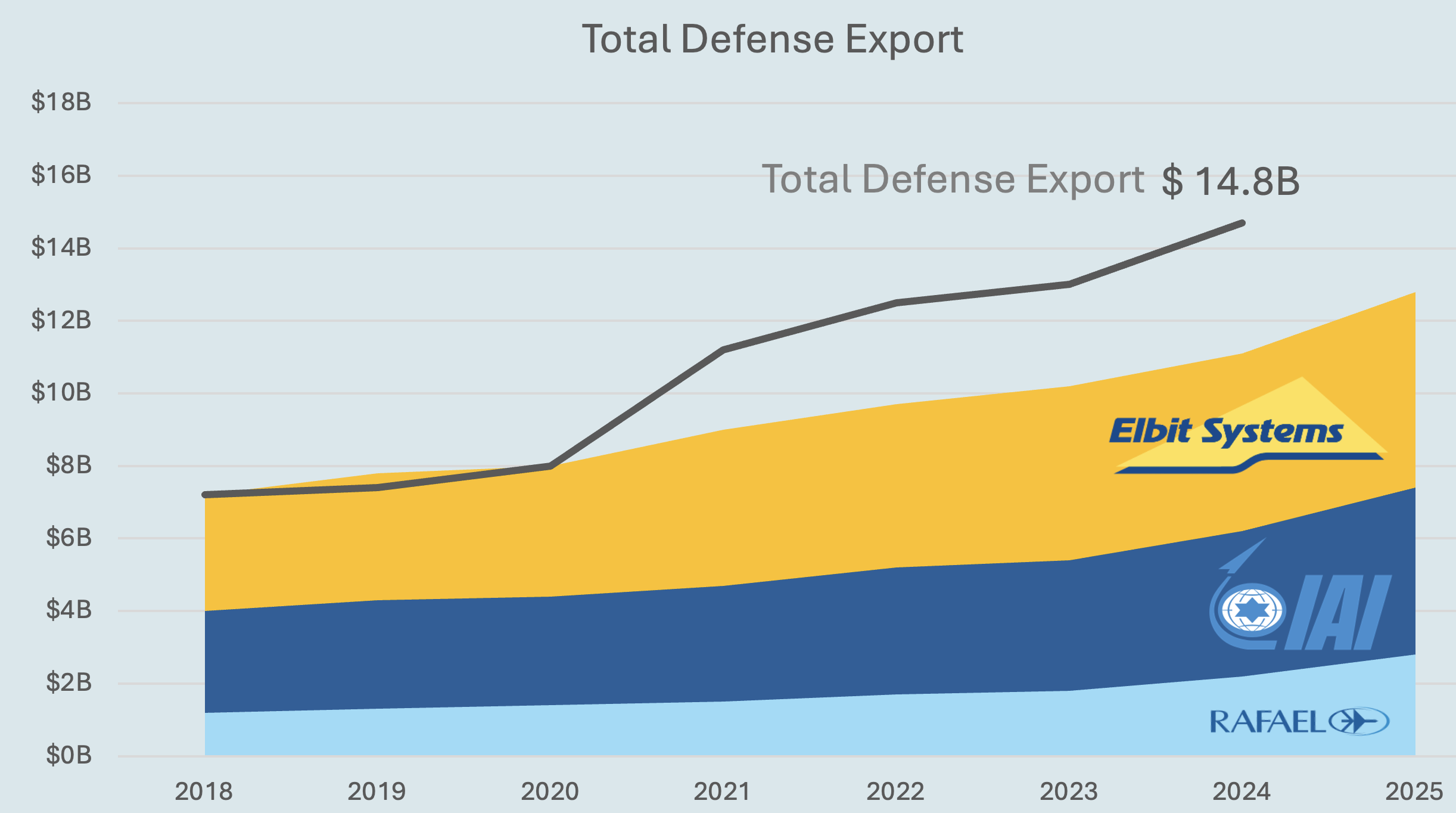
Israel’s defense exports doubled from $7.2 billion in 2019 to $14.8 billion in 2024, reaching about 10% of total goods and services exports. The three largest defense exporters expanded their exports by 41% over this period, with an additional sharp increase of 15.6% in 2025.
|
Positive Business Revenue
|
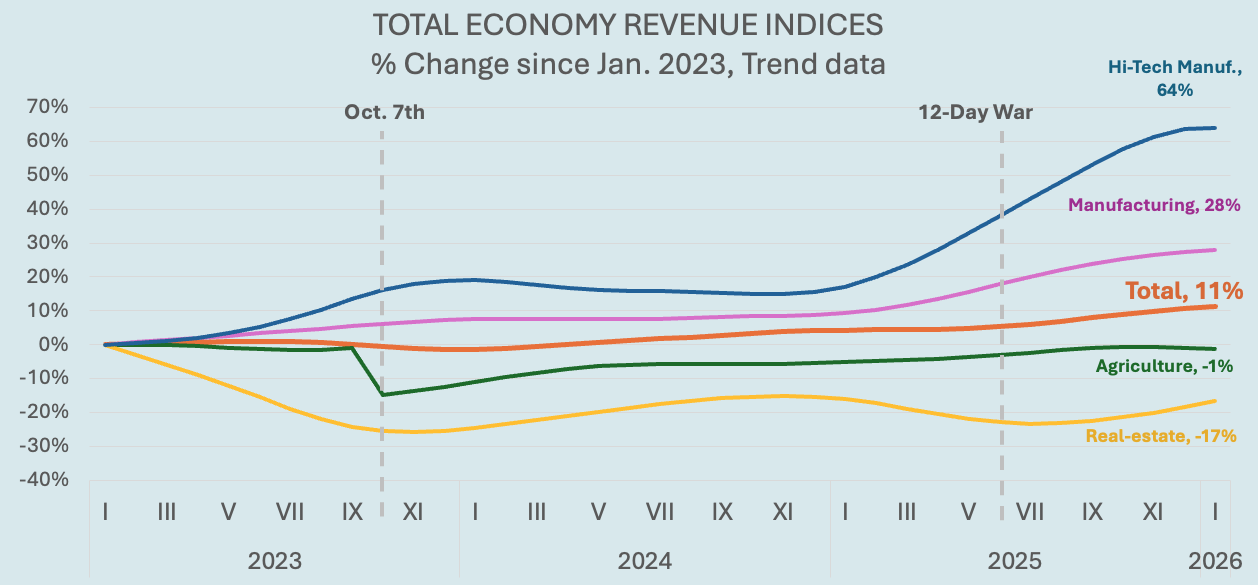
From November 2025 to January 2026, total business revenue rose by 8.4%, following a 11.4% increase in the previous period. Compared with January 2023, total business revenue was up by about 11%, reflecting growth across most sectors. High-tech manufacturing led the expansion with a sharp 64% increase, followed by traditional manufacturing at 28% and the broader tech sector at 22%.
Trend Data
|
|
|
|
|







.png)