🦁 2nd Week of War
💪 Fiscal Fortitude
⚡ Energy Independence
|
This week, in the second week of Operation Roaring Lion, Israeli society and the economy continued to show resilience and adaptability.
The central economic development this week was Israel’s budgetary response to the operation. In light of rising defense and civilian expenditures, the state budget was revised, with NIS 32 billion, more than $10 billion, allocated to the defense budget. To help finance the war effort while preserving fiscal discipline, the government will implement a 3% across the board reduction in ministry budgets. At the same time, following stronger than expected government revenues in January and February, the revenue forecast was raised by +2%. The fiscal deficit is now expected to widen to approximately 5.1% of GDP, while the growth forecast has been revised to about 4.7%, below the previous estimate. As a result, rather than beginning to bring down the debt to GDP ratio this year, Israel is now expected to see the ratio rise modestly or remain broadly stable at around 69%, still low by international standards.
This week, the Ministry of Finance also introduced a support framework designed to stabilize the labor market and provide greater certainty for businesses and workers during this emergency period. The framework includes compensation for employees who are unable to work, alongside a package for affected businesses that includes business continuity grants and compensation for businesses in the north. This supports private sector stability and underscores a clear commitment to preserving economic continuity under pressure.
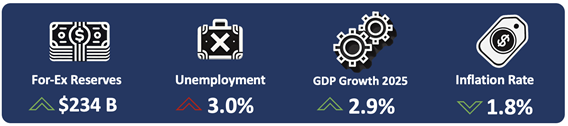
Israel’s financial position also continued to strengthen, with the Bank of Israel’s foreign exchange reserves rising by $1.5 billion to a new record of $234.5 billion.
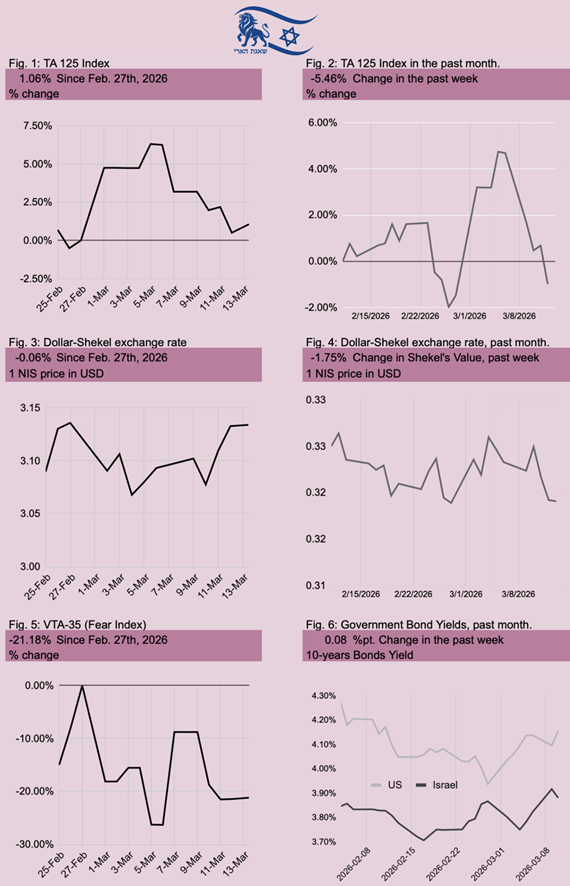
In the capital markets, despite some declines this week, the Israeli stock market has remained in positive territory since the start of the operation on February 27. The VTA35 volatility index also remains around 20% below its level at the outset of the operation.
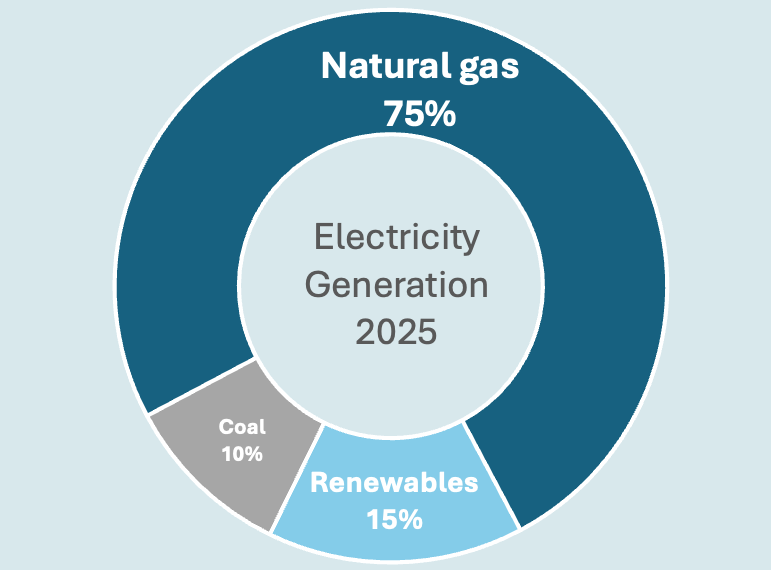
A final note on Israel’s energy sector. Against the backdrop of rising prices in recent weeks, it is worth recalling that Israel holds substantial natural gas reserves. With natural gas reserves standing at roughly 1,000 bcm and annual domestic consumption at around 13 bcm, the Ministry of Energy estimates that current reserves are sufficient through at least 2062, including exports. Israel’s electricity generation relies primarily on natural gas at 75%, alongside renewables, mainly solar, at 15%, and coal at 10%, with no reliance on oil or diesel.
Stay informed and stand with Israel,
Noach Hacker
|
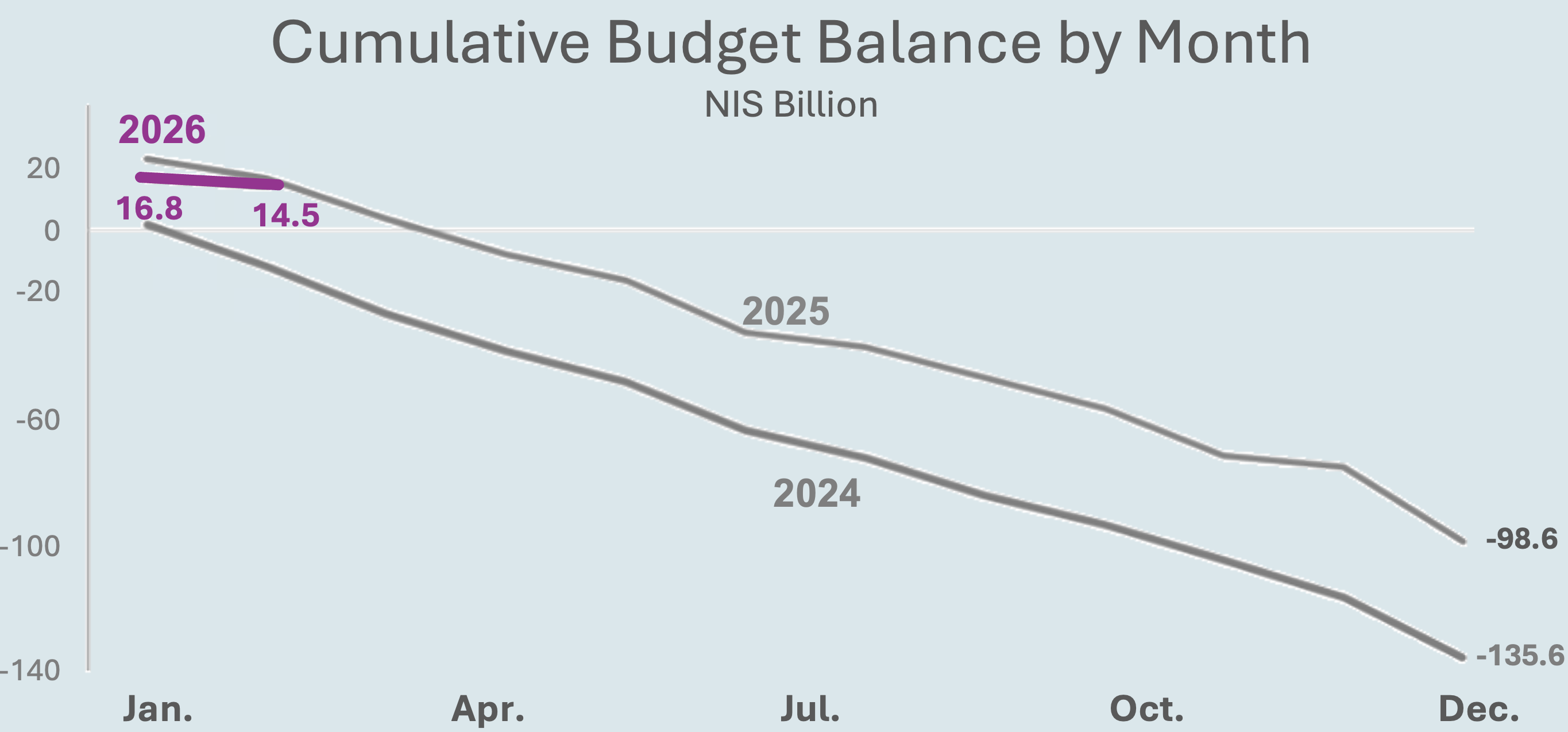
The cumulative fiscal deficit over the past 12 months narrowed by 0.2 percentage points to 4.7% of GDP. By the end of 2025, the total deficit stood at NIS 98.6 billion, significantly lower than the NIS 135.6 billion recorded in 2024. In January 2026, the government recorded a budget surplus of NIS 16.8 billion, while February posted a modest deficit, bringing the cumulative deficit since the start of 2026 to NIS 14.5 billion. According to the current forecast, the deficit is expected to reach 5.1% of GDP by year-end.
|
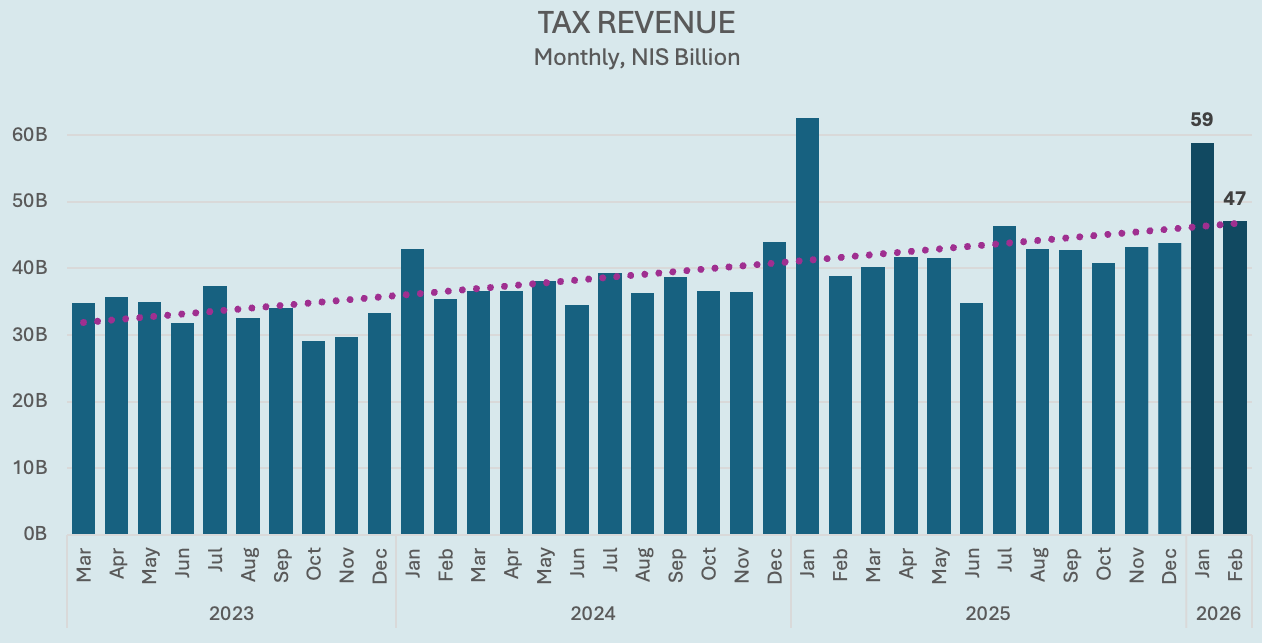
Israel’s tax revenues have followed a clear upward trend from 2023 through February 2026, reflecting fiscal discipline during a period of elevated wartime spending. The increase is consistent with tax increases that were introduced to support budget stability. Revenues in January and February 2026 exceeded expectations, reaching NIS 59 billion and NIS 47 billion, respectively.
|
Israel’s total electricity output in 2025 is estimated at 80.1 TWh, with natural gas supplying 75% of output, renewables 15%, and coal 10%, based on preliminary data. This reflects Israel’s growing energy independence, with very low reliance on imported oil. The government’s target is to raise the share of renewable energy to 30% by 2030. The combination of domestic natural gas and expanding renewable energy continues to strengthen Israel’s energy security and economic resilience.
|
|
|
|
|



.png)
.png)
.png)
.png)