🦁 5th Week of War
🔮 New Economic Outlook
💎 Financial Assets Hit New Peak
|
This is week 5 of Operation Roaring Lion / Epic Fury.
Tonight, Jews in Israel and around the world will celebrate Passover, the holiday of freedom. As a result, this is a shortened work week, the newsletter is being sent earlier than usual.
One of the most significant economic developments of this shortened week was the Knesset’s final approval of Israel’s 2026 state budget. The approved budget will stand at NIS 699 billion, while the updated deficit ceiling for 2026 has been set at 4.9% of GDP. Within the new framework, the defense budget increased by NIS 32 billion to approximately NIS 143 billion, while the education budget rose by 7.9% compared with last year, reaching NIS 97 billion. The budget also includes a multi-year NIS 5 billion investment plan aimed at advancing AI adoption, high-tech growth, and the digitalization of government ministries and related public institutions.
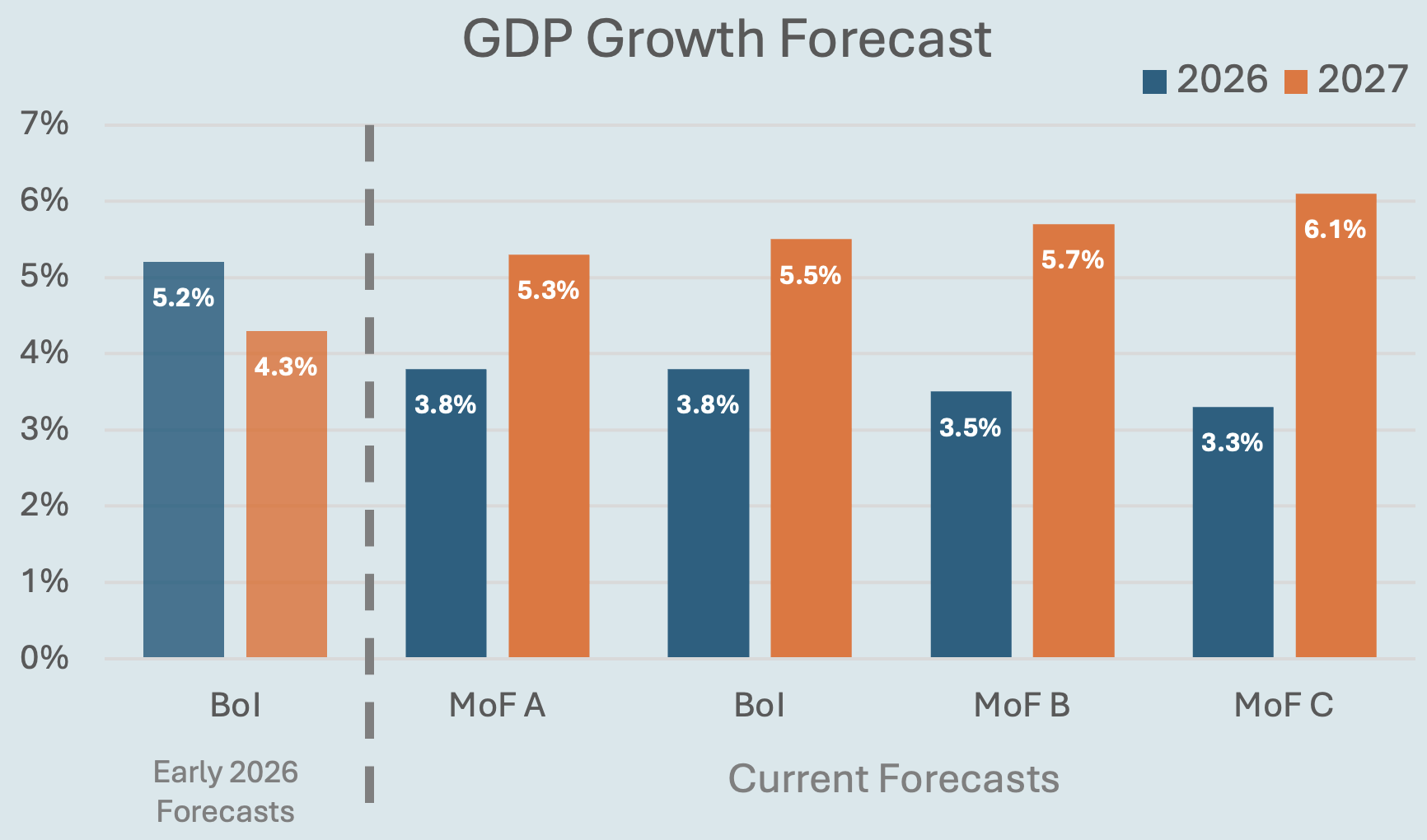
Alongside the budget approval, both the Ministry of Finance and the Bank of Israel published updated economic forecasts for 2026 and 2027. The Chief Economist at the Ministry of Finance presented three growth scenarios, which differ in their assumptions about when the ongoing conflict will end. According to these forecasts, growth in 2026 is expected to range between 3.3% and 3.8%, a notable downward revision from the previous forecast of 4.8%. At the same time, the ministry expects stronger growth to shift into 2027, with projected growth ranging from 5.3% in a scenario of a relatively quick end to the fighting to 6.1% in a scenario in which the fighting continues for longer.
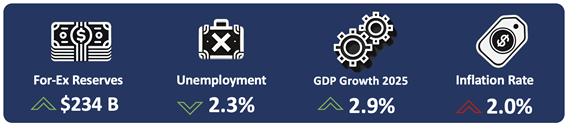
The Bank of Israel presented only its baseline scenario, but it also pointed to a similar shift in growth from 2026 into 2027. Under its updated forecast, growth is expected to reach 3.8% in 2026 and 5.5% in 2027. The Bank of Israel’s forecast also included an inflation projection of 2.2% for 2026, as well as a debt-to-GDP ratio that is expected to rise to around 70.5%.
The bank also noted that it expects one or two interest rate cuts by the end of the year, which would bring the policy rate to 3.5% to 3.75% by the end of 2026.
Wishing everyone a happy Passover, and I look forward to reconnecting next Friday.
Stay informed and stand with Israel,
Noach Hacker
|
A New Peak in Financial Assets
|
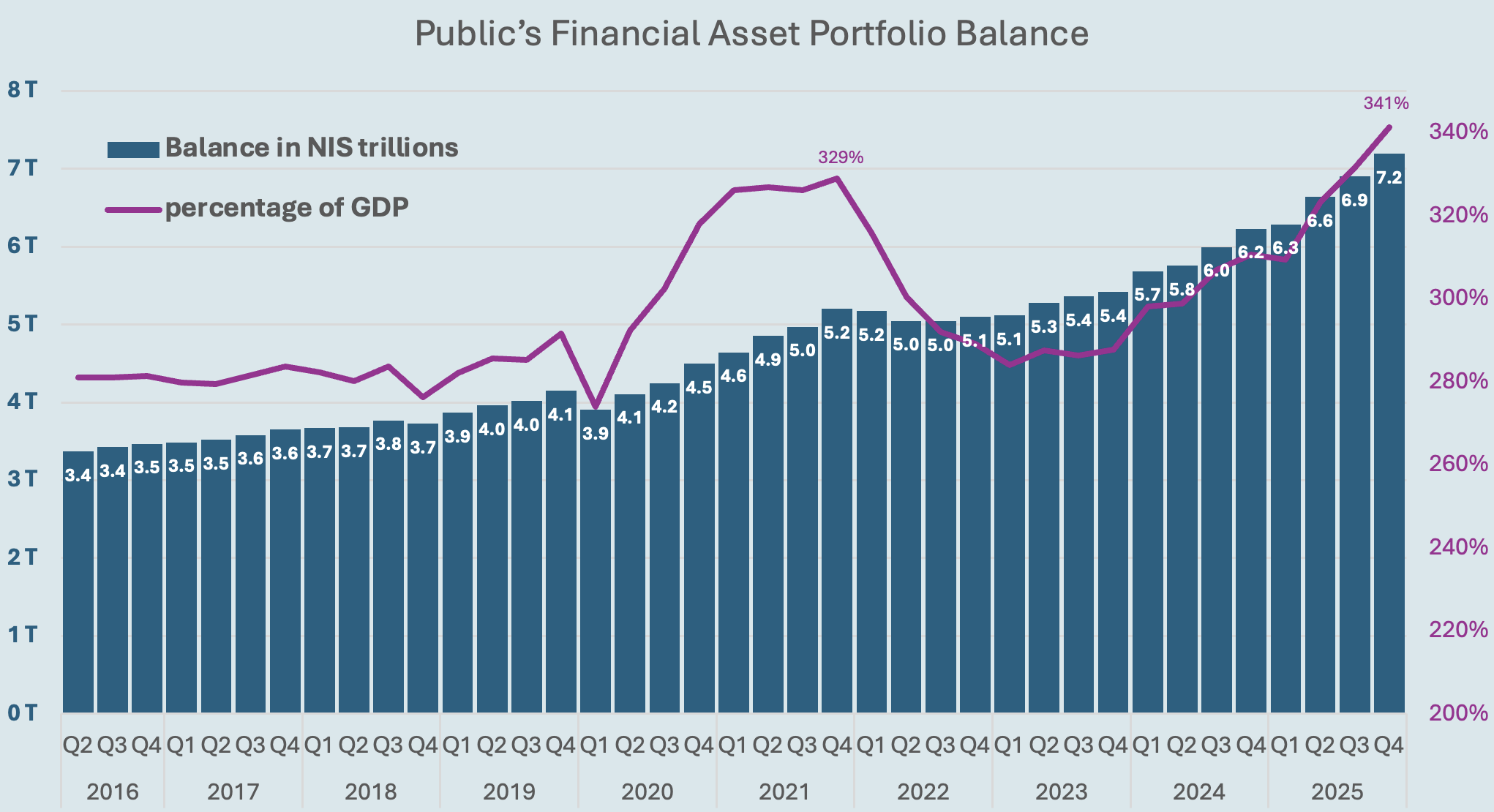
In the fourth quarter of 2025, total asset balances rose by 4.2% to a record NIS 7.2 trillion, continuing the steady growth seen in recent years. The portfolio expanded not only in nominal terms but also relative to the size of the economy, with its value reaching an all-time high of 341% of GDP. This is another indicator of Israel's substantial financial resilience and strength.
|
Surge in Domestic Equities |
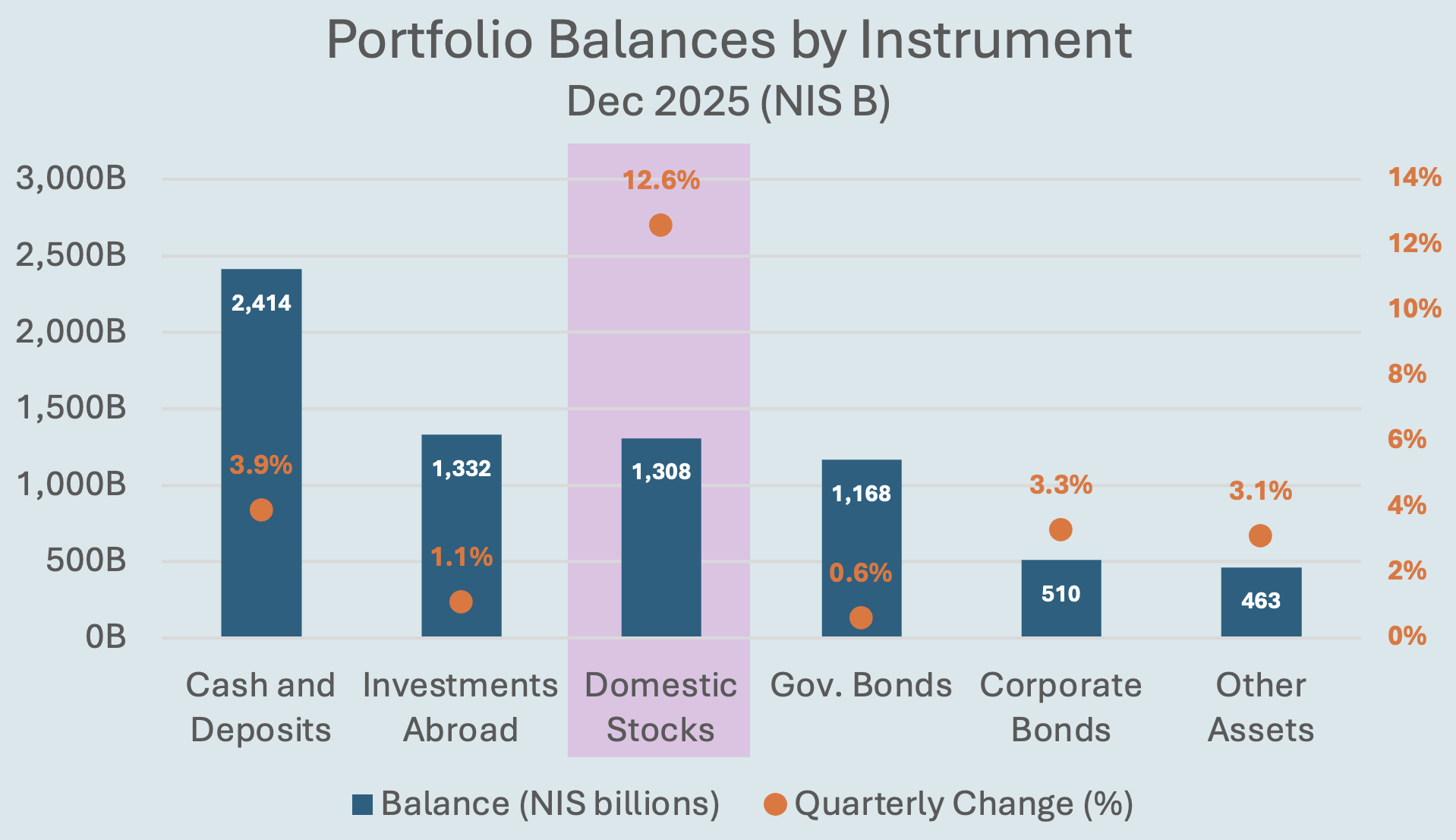
Portfolio balances delivered exceptional performance in 2025, led by +12.6% quarterly rise in domestic stocks (+NIS 145.8b). Investment abroad grew by 1.1%, with foreign equity holdings increased by about NIS 20.4b, while foreign bonds, both corporate and government, declined by about NIS 4b due to shekel’s appreciation. Cash and deposits also remained substantial at NIS 2.4 trillion, reinforcing the portfolio’s liquidity and overall financial stability.
|
Economic Outlook: Quick Recovery
|
Despite the economic shock from Operation Roaring Lion, all major forecasts still point to positive GDP growth in 2026, within a relatively narrow range of 3.3% to 3.8%. The Ministry of Finance presents three scenarios, ranging from Scenario A, which assumes the conflicts end quickly by late April, to Scenario C, which assumes the conflict with Hezbollah continues through the end of the second quarter. Both the Ministry of Finance and the Bank of Israel project stronger growth in 2027, pointing to a solid rebound as security conditions improve.
|
|
|
|
|






.png)