|
Fuel the Science that Shapes Tomorrow |
At the Weizmann Institute of Science, a laboratory is more than just a space. It is where ideas take shape, where scientific curiosity is nurtured, and where researchers push the boundaries of the unknown.
The physical damage to our campus disrupted routines, but not our resolve. What we are restoring is not just infrastructure, but the environment that allows scientific excellence to thrive: Laboratories, advanced equipment, sensitive biological materials - all require urgent, coordinated recovery.
Every contribution helps bring this scientific ecosystem back to life. It fuels our mission of open, creative, curiosity-driven research, and accelerates our return to discovery.
We’re rebuilding more than just our buildings.
We’re rebuilding the Grounds for Future Science. |
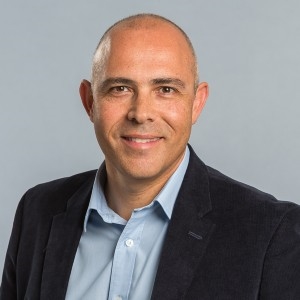 | | Prof. Alon Chen, Weizmann Institute of Science President. Photo by: Axel Griesch. |
|
nature
Scientific research is at the heart of Israel’s success and has worldwide benefits. Our work will continue despite adversity. |
| |
|
|
Life Sciences
Just days after their labs were damaged in the Iranian attack, Profs. Liran Shlush and Amos Tanay publish a study expected to advance the field of blood cell medicine |
| |
|
|
Life Sciences
Weizmann Institute researchers reveal that the nervous system can sense fat tissue and that blocking this ability protects mice from metabolic disorders |
| |
|
"Science Can Change Lives, Spark Revolutions and Perhaps Even Heal the World,” said Dr. Dima Azaiza-Dabbah, speaking on behalf of the graduates at the Weizmann School of Science’s 2025 ceremony for the conferment of PhD and MSc degrees.
A total of 321 alumni completed their studies this year, earning 118 PhDs and 203 MSc degrees. Despite the state of war lasting over 600 days, this year’s cloak wearers included 34 international research students – more than 10 percent of all 2025 graduates.
Also speaking on behalf of the graduates was MSc graduate Matan Vidavski. He served hundreds of days in reserve duty, but returned to the lab at every opportunity, determined to complete his thesis. “Among us sit students who lost loved ones in the war; those who spent a significant part of the past few years in uniform – and those who are still waiting to return home," he said.
Dr. Azazeze-Dabah added: “Here, I found an intellectually rich environment at an international level; here, I found a community of dialogue, innovation and excellence – here, I found a place where you are seen as a human being, regardless of where you come from, and that’s the key to everything.” |
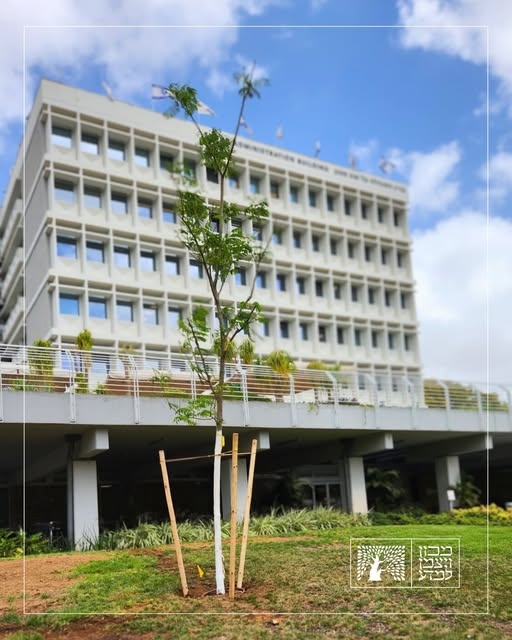
Meet the newest member of the Weizmann Institute’s welcoming committee – a young Royal Poinciana tree, planted just weeks after the fall of our beloved old one at the entrance to campus.
The new tree was planted by our dedicated gardening team, close to where the original Poinciana once stood, as part of an ongoing effort to rehabilitate and renew the campus landscape.
At the same time, cuttings from the fallen tree were carefully transferred to a specialized nursery, with the hope of cultivating a future generation.
To help protect other trees across campus, the Institute has begun routine inspections - ensuring their stability and working to prevent similar incidents. |
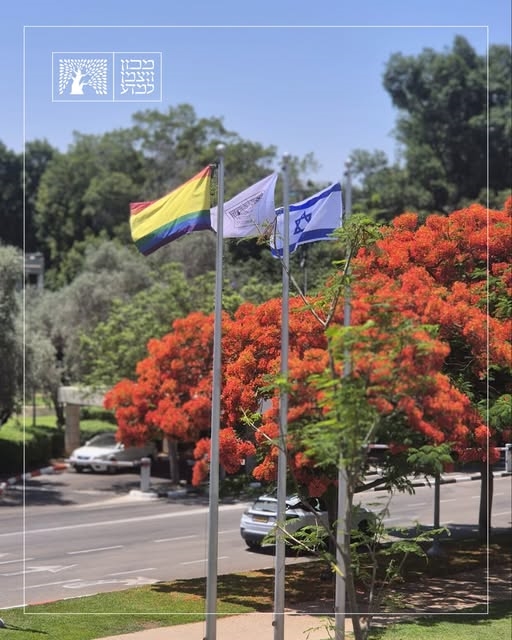
The Pride flag flying at the entrance to the Weizmann Institute of Science during Pride Month is a reflection of our belief that scientific excellence depends on diversity, inclusion and the freedom to be yourself. Our research community brings together people from many backgrounds, and this is what enables us to explore, collaborate and push the boundaries of knowledge.
This year, the flag included the wide yellow stripe – a reminder that Israeli hostages are still being held in Gaza. We continue to hope for their safe and swift return home. |
|
Every breath you take, they really may be watching you |
| |
|
|
A 40-year-old conjecture on shapes’ cross sections is finally proven |
| |
|
|
Weizmann Institute researchers use AI models to show the act of ‘whisking’ allows mice to generate sounds that, encoded in their brain’s auditory cortex, aid them in navigation |
| |
|
|
Weizmann scientists uncover why our immune system lets us eat without harm, how it tolerates food—and why it sometimes fails |
| |
|
|
Now, researchers from Israel and Switzerland have shown how "swarm intelligence" resembling advance planning can nevertheless emerge from the concerted operation of many of these tiny brains
|
| |
|
|
The memory of a story appears to have a tree-like structure, with abstract summaries branching out into more specific details |
| |
|
Postdoctoral Opportunities |
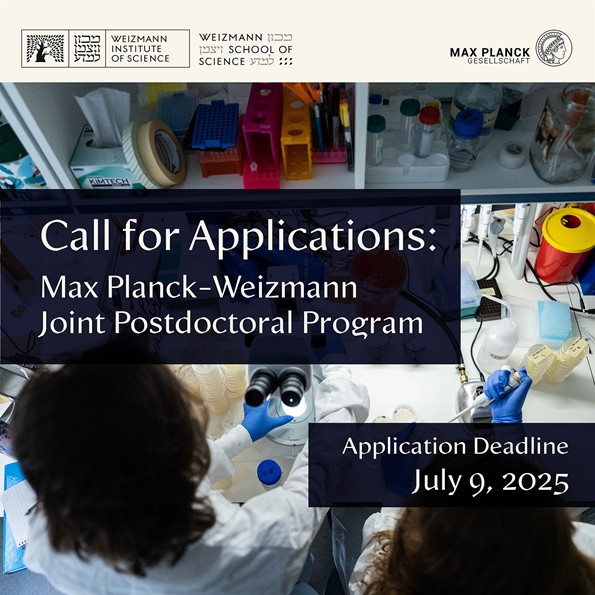
DEADLINE EXTENDED TO 9 JULY 2025
Advance as an independent researcher at two world-renowned institutions through our Max Planck-Weizmann Joint Postdoctoral Program.
This four-year, fully funded postdoctoral program brings together the strengths of the Max Planck Society and the Weizmann Institute of Science, offering you the chance to engage in research at the forefront of scientific discovery alongside some of the leading minds in the fields of Life Sciences, Physics, Chemistry, Earth Science, Mathematics and Computer Science.
Benefit from a competitive annual fellowship of up to €67,946, comprehensive family support, and world-class research infrastructure. This program is your gateway to becoming a leading independent researcher.
|
Science for All - Davidson Institute of Science Education |
|
An Israeli study suggests a new way to detect life on Jupiter’s moon Europa. A new dwarf planet has been identified at the edge of the solar system. China launches a mission to collect asteroid samples, and Starship makes slow progress, despite a fiery end. This Week in Space |
| |
|
|
|
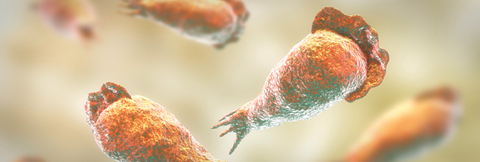
Naegleria fowleri is a single-celled organism commonly found in warm freshwater. In rare cases, it can enter the human brain and lead to a rapidly lethal outcome—as recently occurred in Texas. What do we know about this deadly organism, and how can we reduce the risk? |
| |
|
| | |
| |
|
|



.gif)


.png)

(1).png)